Saturday, 20 February 2016

Lime Aid - Spring's at our feet

Once again it is time to trim the "epicormic growths" (suckers) from the feet of the trees in Lime Tree Avenue, which led to long-gone Uckfield House.  The year since I last did this seems to have rushed by. About half-a-dozen of us spent the morning working our way through nearly half the trees.  The group will be at work again next Saturday morning (Feb 27th - 9am until 1pm - more volunteers are always welcome).

The first of my 7 trees - before and after.
The day job has been pretty heavy since December and it was great to spend time working in the presence of trees that have lived so long and seen so much. While we were there it became more-and-more obvious that Spring was drawing life from the soil at our feet.

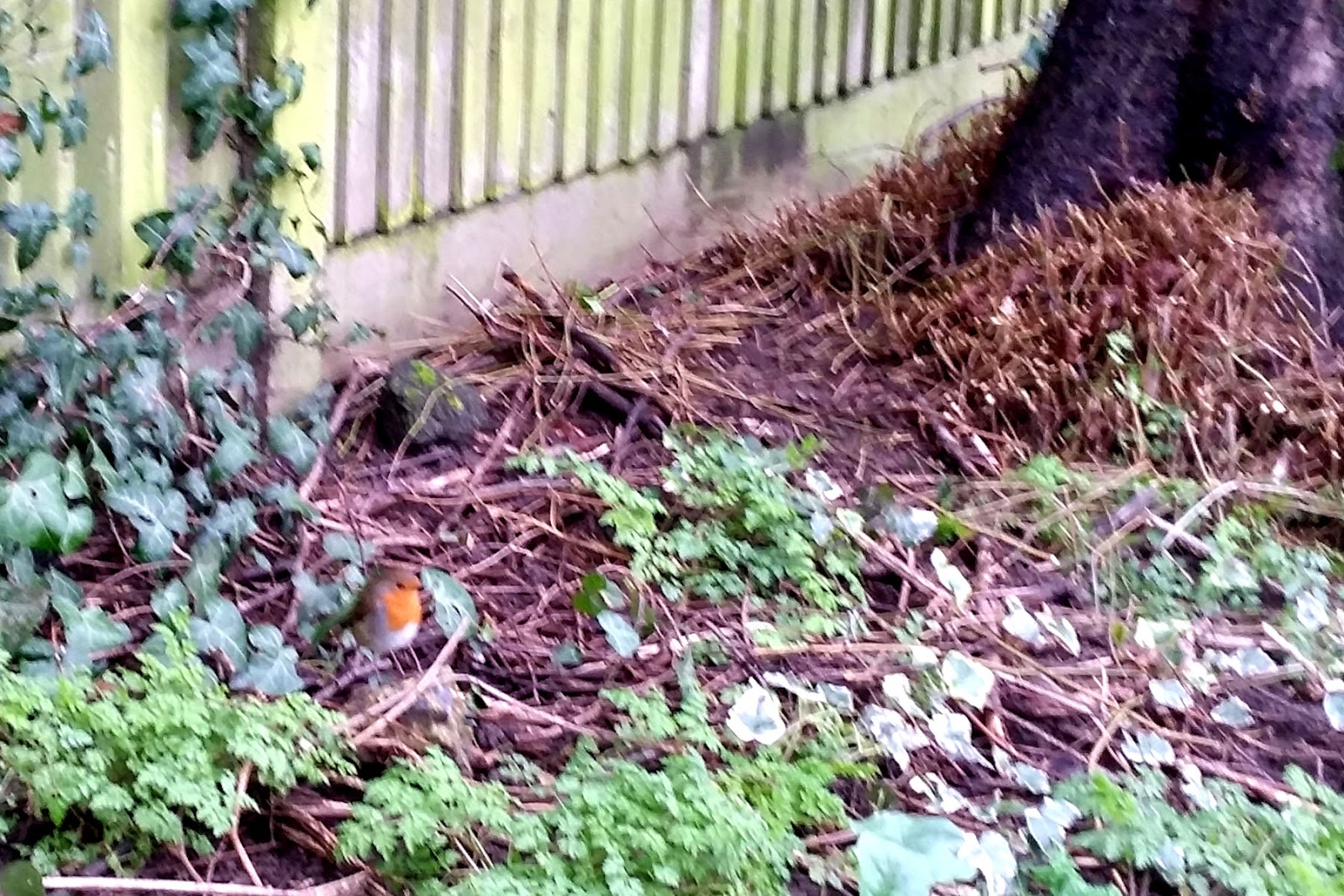
A cheeky robin found morsels where we had been working.
White-lipped snails and worms hiding amongst the growths at the base of a tree.
The wild plants round the trees are growing fast. I saw violets, primroses and alexanders already in flower as well as clumps of handsome wild arum leaves.

Wild arum leaves.
While I was working on the last of my trees, my every move was scrutinised by a curious goat, one of a pair kept by the school.

The school goat.
In case we were in the slightest doubt about the approach of spring - a frog appeared near one of the trees and was placed gently by the fence so it could find its way to the pond.

Frog and primroses.
After a few hours, I began to run out of steam and went home, scooping up some well-deserved fish and chips on the way.


Saturday, 30 January 2016

Big Garden Birdwatch - 2016

Once again, I've been doing the RSPB's annual Big Garden Birdwatch. I stopped rushing round trying to get everything done and counted birds.

Some of my notes from this year's birdwatch.
It seems that every time I do a birdwatch, I see something new. This time it was a huge wood pigeon and a shy female blackbird sharing the tiny crab apples from one of our trees. The blackbird had been haunting the garden for some days and now we know that the crab apples were the attraction. I also enjoyed seeing two robins, who appeared twice:
  • At 9:25 one robin flew to the base of the bird table, while the other sang in our conifer.
  • At 9:53, one was searching round the base of the bird table, while the other perched in the cotoneaster nearby.
To be honest, I didn't see very many birds compared to previous years. The Guardian's article Mild winter means lower numbers for annual garden bird count, RSPB warns says ...

RSPB wildlife adviser, Ben Andrew, said: “If the UK experiences a continuation of these milder temperatures, those taking part in Big Garden Birdwatch may notice their gardens quieter than in other years. The milder weather means that there is more food available in the wider countryside, with birds being less reliant on garden feeders.”

After my hour was up, I had seen 12 individuals, which is the lowest in the years that I have been doing this. On the up side, one of the local crows actually landed rather than just flying over so I was able add crow to my list for the first time. 

Here are the results of this, and previous years' birdwatches:


2011
Saturday, 29 Jan
2012
Sunday, 29 Jan
2013
Saturday, 26 Jan
2014
Saturday, 25 Jan
2015
Sunday, 25 Jan
2016
Saturday, 30 Jan
Start time8.45 am8.45 am9.07am8.50 am8.45 am 8.55 am
Weather dull, icy
cold, brightdamp, mistybright, cold dull, mild
Blue tit33232 2
Blackbird22332 2
Carrion Crow      1
Magpie222211
Robin11123


2
Starling89285 2
Woodpigeon1
12 22
Chaffinch2


2 
Coal Tit
1

  
Collared Dove211
1 
Dunnock31

  
Goldfinch

1
7 
Great tit
1

   
House Sparrow34

1  
Pied Wagtail111
  
Song Thrush2
1
1 
No of species 12 11 10 611 7
No of individuals302615202812

Saturday, 2 January 2016

2015's Garden Visitors

Once again, I've been using my Bushnell Trail camera to record wildlife that visits our garden. I missed a little bit of January because I needed to repaint the box. For most of the year I kept the camera in the same position. Average number of visits was well up on 2014, which had fewer visits per night than 2013.
Two regular visitors - sadly the dark buck hasn't  visited since 6th August 2015.

How many visits in 2015?

In 2015:

  • Fox visits peaked in March/April - there were regular encounters between two individuals, maybe the youngsters we saw last year.
  • We had badger visits through late spring, summer and autumn
  • The fallow deer came in Spring, August and December.

How does this compare to previous years?


For the year as a whole:

  • Fox visits are up by about half c.f. 2014 although we had far fewer visits in the latter part of the year. We are seeing more occasions when there are two foxes in the garden.
  • Badger visits are up by about a quarter.
  • Deer visits are down. This may be due to us removing a tree at the end of May 2014 and/or the possible loss of one of the regular visiting males.
I have spotted a few patterns over the 3 years I have been recording:

  • In all three years that I have been recording, there is a dip in the number of fox visits in May - perhaps due to the birth of cubs.
  • Badgers are always absent for a period in winter, when they are dormant:
    • 2013 - November to January (2014)
    • 2014 - October to April (2015)
    • 2015 - November to ?
  • Fallow deer are:
    • absent at the beginning of the year first appearing in March (2015) and April (2013/4)
    • appear at various times during the late spring and summer months
    • absent for part of the autumn around October, presumably for the rut
    • often return in December enabling me to make predictable Rudolf jokes.

New Year Plant Hunt 2016 - Uckfield

The Botanical Society of the British Isles regularly runs a flower hunt. I did my first hunt in Uckfield, Sussex last year and found 19 natives and 3 naturalised garden flowers. To my surprise, very few of my finds were in nature reserves and other 'official' places for nature. Instead I found most of my flowers in the scrappy edges: near shops, on walls and under hedges. So this time, I decided to focus my attention on these sorts of areas.

I was a little pessimistic because I haven't been seeing wild flowers in some of the places I usually see them. On the other hand, it has been very mild so maybe I could expect a good haul. Then on the very morning of the hunt, a frost - just enough to make flowering plants drop their petals and sulk.

Oh no! A frost!
I checked out the area near Tesco Express and found various little weeds tucked away in sheltered spots by walls and under hedges. I found more plants than last year. New finds included Herb Robert and Ivy-leaved Toadflax.  I like the story that Ivy-leaved Toadflax came to Britain with Italian statues that young gentlemen brought from their grand tours in the 1600s. I have no idea if it is true but it is a pretty story for a pretty flower.
Ivy-leaved Toadflax near Tesco Express, Browns Lane.
I also found the same resilient little weeds that I found last year.

Detail of Common Groundsel, which I also found last year.
As I made my way through the estate I found a fairly large group of Red Deadnettles at the foot of a wall. This seems to part of a pattern - this year I have found many more substantial groups of flowers rather than ones and twos of last year.

Swinging into Southview Drive, I found large numbers of flowers and berries on the large ivy on the corner. Once in the High Street, I eagerly examined the old wall at the top of the town and found Wall Bellflower and Yellow Corydalis, just like last year. The flowers were more numerous and in better condition than before.

Wall Bellflower, High Street.
Our town has many little treasures tucked behind the high street. The previous day, I had popped into Parade Radio to pick up light bulbs and chanced upon deeply coloured violets just outside. I couldn't believe they were Sweet Violets but their leaves were much rounder than the Dog Violets that are familiar from our own garden.

After checking Holy Cross's walls and graveyard I cut down ancient Belmont Lane. I drew a blank last year but this year found Holly flowers and Bush Vetch.
Bush Vetch in Belmont Lane.
The Holly wasn't the only plant showing flower alongside its berries. On the bypass, the Hawthorn hedge surrounding the allotments also had a scattering of bloom. I definitely identified it correctly as I was able to trace the stem back to the still green leaves. Once again I found Yarrow and Black Medic by the fire station.
Yarrow near the Fire Station.
I cut through the bell walk shopping area to the river bridge. The hazel catkins over the river are lengthening and getting very yellow unlike those in our North-facing garden, which are still tight and green.
Hazel catkins in front of Bridge Cottage.
I had timed my route so that 11 o'clock saw me outside the Station pub, just as it opened. So I was able to take a break and warm up.
Taking a break.
By the time I left, quite a few people were filtering in and I reluctantly left the friendly pub to go back into the cold for my final lap.  As I was out-and-about I decided to check out Uckfield Town Council's Bridge Farm Wood, which overlooks the new station car park. I didn't find any flowers there but there was a variety of ferns and mosses as well as a lively squirrel.
Bridge Farm Wood.
I had to get home quickly as I still needed to check the garden. Taking a short cut through one of the twittens (alleyways) I found Green Alkenet, False Brome and naturalised Yellow Strawberry.
Green Alkanet, Manor Park twitten.
Finally, in our own garden, I found several different wildflowers including an out-of-season Cowslip giving me a total of 30 native and 3 naturalised plants in flower.
Cowslip, Manor Park garden.

The Science Bit

Location: Uckfield, East Sussex.  Start point: TQ479219

30 wild plants flowering on New Year's Day:

Achillea millefolium Yarrow
Bellis perennis Daisy
Brachypodium sylvaticum False-brome New in 2016
Capsella bursa-pastoris Shepherd's Purse
Cardamine hirsuta Hairy Bittercress
Corylus avellana Hazel New in 2016
Crataegus monogyna Hawthorn New in 2016
Crepis capillaris Smooth Hawk's-beard New in 2016
Cymbalaria Muralis Ivy-leaved Toadflax New in 2016
Euphorbia peplus Petty Spurge
Geranium robertianum Herb Robert New in 2016
Hedera helix  Ivy
Ilex aquifolium Holly New in 2016
Lamium album White Dead-nettle
Lamium purpureum Red Dead-nettle
Lapsana communis Nipplewort New in 2016
Medicago Arabica Black Medic
Pentaglottis sempervirens Green Alkanet New in 2016
Poa annua  Annual Meadow Grass
Primula veris Cowslip New in 2016
Primula vulgaris Primrose
Ranunculus ficaria Lesser Celendine
Senecio vulgaris  Groundsel
Sonchus oleraceus Smooth Sow-thistle
Stellaria media Common Chickweed
Taraxacum officinale Dandelion
Ulex europaeus Gorse
Vicia sepium Bush Vetch New in 2016
Viola odorata Sweet Violet
Viola riviniana Dog Violet New in 2016

4 naturalised plants flowering on New Year's Day:

Helleborus foetidus Stinking Hellebore New in 2016
Campanula portenschlagiana  Wall Bellflower
Corydalis lutea Yellow Corydalis
Duchesnea indica Yellow-flowered Strawberry New in 2016


Saturday, 26 December 2015

My 2015 in Uckfield nature photos

As the year draws to a close it's time to look back on the wildlife I have seen in and around Uckfield during 2015.

January

January started with the BSBI New Year Plant hunt, in which I spent an hour looking for wild flowers that were out in bloom. I found a total of 21 different types - surprising considering that we had a few days of hard frost. 
Campanula on old wall at the top Uckfield's High Street.
Towards the end of the month, I took part in Lime Aid's volunteer session - trimming back unwanted growth at the feet of the amazing old Lime trees that once led to Uckfield House.
Before and After - Lime Tree Avenue.
As usual, the month ended with the RSPB's Big Garden Birdwatch.

February

On the 8th, four tiny Goldcrests were fluttering round the lower branches of our laurels and nearby bushes. One was displaying to the others with his normally inconspicuous crest feathers fluffed up in a bright orange "quiff".  One sunny day brought out a tattered but still lovely Red Admiral.

Red Admiral, Manor Park garden.

March

When Hazel catkins are shaken by the wind, you can see how they get the name "lambs tails". This year has been exceptionally windy.
Hazel, Manor Park garden.

April

Two Fallow Deer bucks, who are regular visitors to the Manor Park estate, came into the garden for a couple of hours. I and others were concerned that the darker one was limping. However it showed a fair turn of speed when escaping would-be rescuers.

 
Fallow deer, Manor Park garden.

May

May is, of course, bluebell time. This year I visited Boothland Wood, which in the next few years will be surrounded by the Ridgewood Farm development.  The woodland has a light, airy feel because it is surrounded by open farmland and has many elegant, slender beech trees.
Bluebells, Boothland wood.
Later in the month, the splendid WRAS rescued an injured woodpigeon from our back garden.
WRAS to the rescue, Manor Park.
The month ended with the Garden Biobliz in which I tried to find as many wild flowers and creatures in the garden as possible.  In the end, I identified 129 species compared to 104 last year.
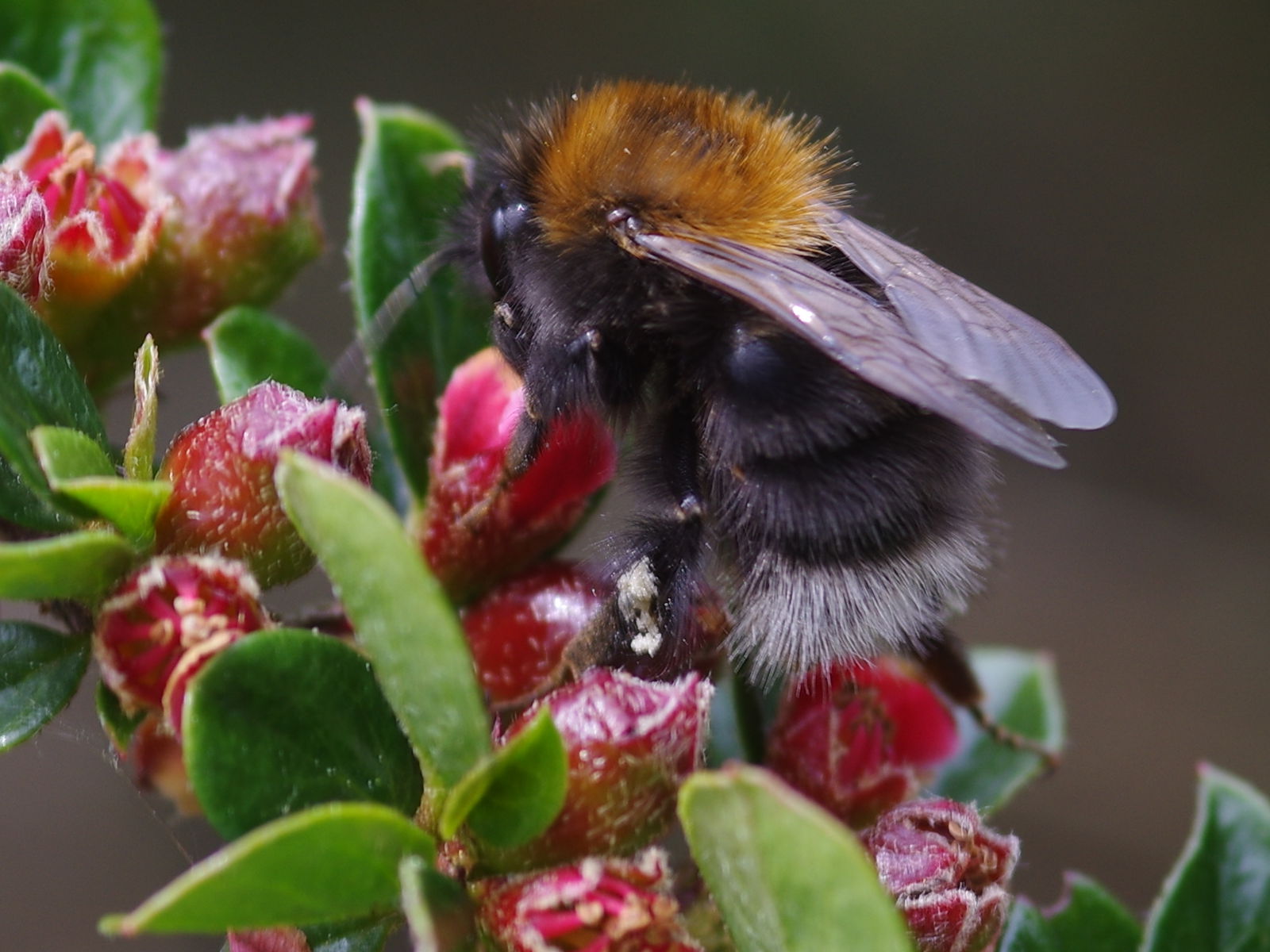
Tree bumble bee spotted during Garden Bioblitz, Manor Park garden.

June

June was dominated by 30 days wild. This project meant having one wildlife moment a day.  To me it meant pausing and really taking notice of what was around me. My most memorable Uckfield discovery was a pair of Grey Wagtails that live on the part of the River Uck that flows under our station. I saw them courting and mating and was able to follow their progress up to the point when I saw a fluffy youngster.

Grey Wagtails on riverbank, seen from Uckfield station platform.

Another highlight was spotting Uckfield's very own Stickleback Si (named after one featured on BBC's Spring Watch) in the Hempstead Meadow Nature Reserve. I could see his red tummy and I was delighted to see him duck into his tunnel nest for a moment. 

July

Towards the end of July, I spent time pulling invasive Himalayan Balsam in the Hempstead Meadow Nature Reserve.  It was very pleasant to spend time in the reserve like that and getting to see special trees like rare Black Poplars and all manner of tiny creatures.
Black Poplar (left) and Himalyan Balsam (right). Hempstead Meadow
July was also marked the start of the Big Butterfly Count.  This year I saw more butterflies (108 in 12 counts) than last.  Our most regular visitor were bright orange and brown Gatekeepers. 

Gatekeeper butterfly, Manor Park garden.

August

The 8th of August was flying ant day. Suddenly they erupted from our lawn and were flying skywards like so many golden angels. It wasn't just us - all over the country, people were commenting, via social media, on the ants.  
Black ants, Manor Park garden.
On the 22nd of August 2015, I spent a lovely hour in our garden experiencing the light fading away and the creatures of the day finding their way home.  I counted about 400 Rooks as they flew past our house to their roost - probably Lime Tree Avenue.

On a wet bank holiday, I finally found the little remnant of heathland habitat on Manor Park, which is home to hundreds of dainty Autumn Ladies Tresses flowers.
Autumn Ladies Tresses, Manor Park estate.

September

September mornings found our garden full of spider webs sprinkled with jewel-like drops of dew. I was pleased to see that they seemed to be catching plenty of crane flies.
Garden Spider (Araneus diadematus) in Manor Park garden.
At the end of the month, I cut through Hempstead Meadow Nature Reserve and found plenty of flowers still out including a blue, Meadow Crane's-bill.
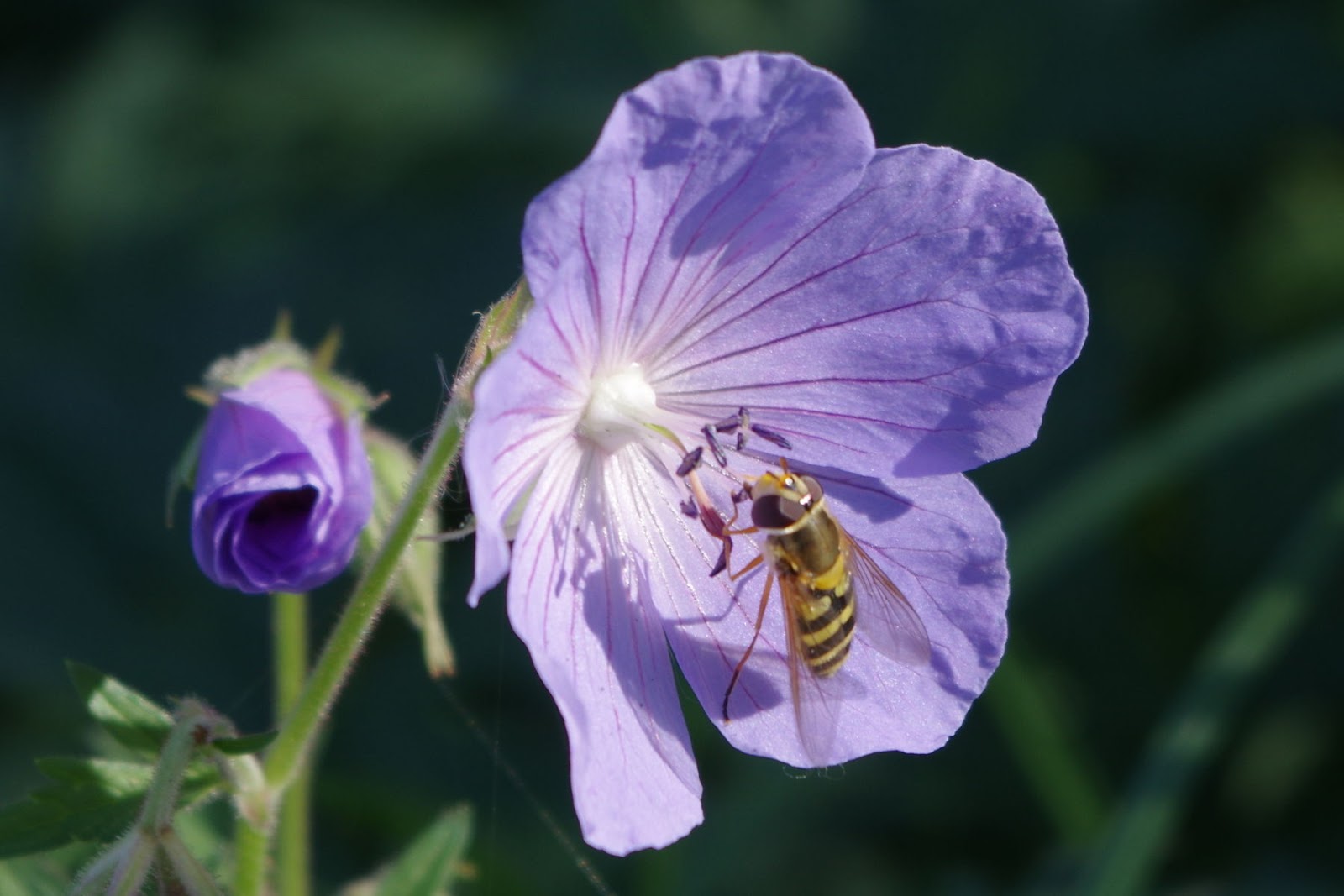
Hoverfly (Syrphus ribesii) on Meadow Crane's-bill. Hempstead Meadow.

October

In the run up to Halloween I expect to hear much talk about bats and other spooky things but I don't expect to see real ones. However the long, late summer brought us two surprise visits. One on October the 18th at about 6:15pm when we saw three dancing in the fading light and another at about 5pm on October the 30th.
Autumn leaves and Halloween decorations.

November

A grim month in all sorts of ways. At the start of the month fog swept in closing both Gatwick and Heathrow and on the 21st there were snowflakes in the rain.  Even the foxes that regularly visit our garden stayed away for most of the month.
One of the few fox visits in November. Manor Park garden.

December

In the run up to Christmas we had a few visits from a fallow deer with fine antlers. This is probably the lighter of the two bucks that we saw earlier in the year. Sadly the darker one wasn't with him.
Fallow buck, Manor Park garden.
Christmas is a time when we traditionally bring greenery inside. I'll leave you with the lovely Nordman tree that I bought from Vulcan Farm. 


Tuesday, 27 October 2015

Bats in our Uckfield garden

As it's coming up to Halloween, I thought it would be a good time to talk about bats.

On a fine summer evening, we often see bats swooping and diving in front of our house. I think these are pipistrelles. The Bat Conservation Trust tells us:

"Common pipistrelle is one of the UK's most common bat species. It is a small bat which is found in a wide range of habitats including farmland, woodlands and suburban and urban habitats. It often roosts in crevices around the outside of houses and buildings.

The Collins Fields Guide - Mammals of Britain and Europe says:

Habits: "Leave roost c. 20 mins (2-35 mins) after sunset" and "Active at feeding sites for up to 8 hours."
Food: "Small insects caught and eaten in flight: main food is midges and caddis flies ..."
Breeding: "Births in June-Mid July."
Lifespan: "Max recorded 16 years 7 months."
Measurements: "Head-body length: av. 36-51mm." and "Wingspan: 180-240mm."

I've seen them on warm evenings from March to October. On October the 18th this year, at 6:15pm, there was a pretty flush in the early evening sky and 3 bats were swooping overhead, guzzling up pesky midges and other insects.
Sketch - 5th August 2005.
I've often seen the local cats watching the bats. You can see their frustration as they stalk but cannot catch these unreachable flying mice.

Sadly one long-eared bat was not so unreachable. I found its body on the path one day, presumably killed by a cat.

Long-eared bat - 19th Aug 2006.


The Bat Conservation Trust tells us:

"The brown long-eared bat is a medium-sized bat with ears almost as long as the body. It flies close to vegetation or in woodland, often using its large ears to listen for prey sounds and gleaning insects from the surface of foliage. It eats mainly moths, beetles, flies, earwigs and spiders."

I once saw one almost creeping round the trees in our garden searching for its food.

The Collins Fields Guide - Mammals of Britain and Europe says:

Habits: "Generally emerges in dark."
Food: "Insects, mainly moths ..."
Breeding: "Births in June and July."
Lifespan: "Max recorded 22 years."
Measurements: "Head-body length: av. 37-53mm." and "Wingspan: 240-285mm."

It notes that their "Habit of landing on the ground makes them vulnerable to predators."

The RHS has some advice about attracting bats to your garden.

Saturday, 22 August 2015

Rooks in the fading light

On the 22nd of August 2015, I spent a lovely hour in our garden experiencing the light fading away and the creatures of the day finding their way home.  I counted rooks as they flew past our house to their roost - probably Lime Tree Avenue. When I started, at 7:30pm on the sky was still blue sprinkled with little white clouds.  A gentle pink glow on the horizon was the only clue that the day was ending.  Half a dozen house martins had just wheeled overhead and a red admiral paid a last visit to our buddleia.  Tiny hints of yellow showed that the cigar-shaped evening primrose buds had just started to unroll.

In half-an-hour clouds turned from white to slate.
For the first quarter hour, there was just a trickle of rooks.  By 8pm, the trickle had turned into a flood. One group of birds was about 40 strong and they flew over too fast to count properly.

One group of rooks.
As a dragonfly feasted on evening insects, the flood slackened. By 8:20pm, they had all gone. I had counted about 400 rooks past our house in less than an hour.

When the rooks passed our house.
During that hour, the light had nearly gone, moths had started to fly and the evening primrose flowers had opened. So much had changed in such as short time.

Evening primrose flower.