As the year draws to a close it's time to look back on the wildlife I have seen in and around Uckfield during 2015.
January
January started with the
BSBI New Year Plant hunt, in which I spent an hour looking for wild flowers that were out in bloom. I found a total of 21 different types - surprising considering that we had a few days of hard frost.
 |
| Campanula on old wall at the top Uckfield's High Street. |
Towards the end of the month, I took part in
Lime Aid's volunteer session - trimming back unwanted growth at the feet of the amazing old Lime trees that once led to Uckfield House.
 |
| Before and After - Lime Tree Avenue. |
As usual, the month ended with the
RSPB's Big Garden Birdwatch.
February
On the 8th, four tiny Goldcrests were fluttering round the lower branches of our laurels and nearby bushes. One was displaying to the others with his normally inconspicuous crest feathers fluffed up in a bright orange "quiff". One sunny day brought out a tattered but still lovely Red Admiral.
 |
| Red Admiral, Manor Park garden. |
March
When Hazel catkins are shaken by the wind, you can see how they get the name "lambs tails". This year has been
exceptionally windy.
 |
| Hazel, Manor Park garden. |
April
Two Fallow Deer bucks, who are regular visitors to the Manor Park estate, came into the garden for a couple of hours. I and others were concerned that the darker one was limping. However it showed a fair turn of speed when escaping would-be rescuers.
 |
| Fallow deer, Manor Park garden. |
May
May is, of course, bluebell time. This year I visited
Boothland Wood, which in the next few years will be surrounded by the Ridgewood Farm development. The woodland has a light, airy feel because it is surrounded by open farmland and has many elegant, slender beech trees.
 |
| Bluebells, Boothland wood. |
Later in the month, the splendid
WRAS rescued an
injured woodpigeon from our back garden.
 |
| WRAS to the rescue, Manor Park. |
The month ended with the
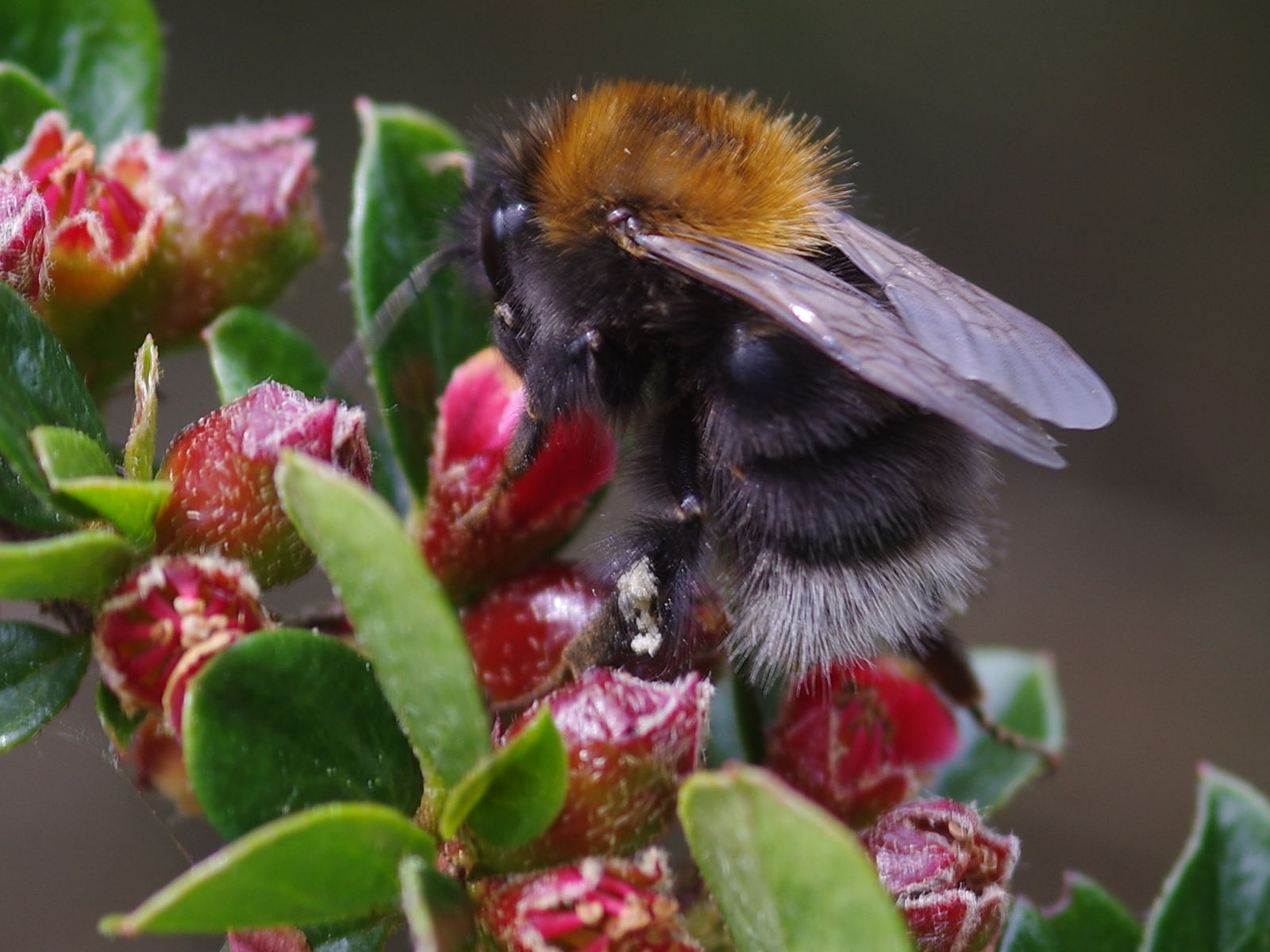
Garden Biobliz in which I tried to find as many wild flowers and creatures in the garden as possible. In the end, I identified 129 species compared to 104 last year.
 |
| Tree bumble bee spotted during Garden Bioblitz, Manor Park garden. |
June
June was dominated by 30 days wild. This project meant having one wildlife moment a day. To me it meant pausing and really taking notice of what was around me. My most memorable Uckfield discovery was a pair of Grey Wagtails that live on the part of the River Uck that flows under our station. I saw them courting and mating and was able to follow their progress up to the point when I saw a fluffy youngster.
 |
| Grey Wagtails on riverbank, seen from Uckfield station platform. |
Another highlight was
spotting Uckfield's very own Stickleback Si (named after one featured on BBC's Spring Watch) in the Hempstead Meadow Nature Reserve. I could see his red tummy and I was delighted to see him duck into his tunnel nest for a moment.
July
Towards the end of July, I spent time
pulling invasive Himalayan Balsam in the Hempstead Meadow Nature Reserve. It was very pleasant to spend time in the reserve like that and getting to see special trees like rare Black Poplars and all manner of tiny creatures.
 |
| Black Poplar (left) and Himalyan Balsam (right). Hempstead Meadow |
July was also marked the start of the
Big Butterfly Count. This year I saw more butterflies (108 in 12 counts) than last. Our most regular visitor were bright orange and brown Gatekeepers.
 |
| Gatekeeper butterfly, Manor Park garden. |
August
The 8th of August was
flying ant day. Suddenly they erupted from our lawn and were flying skywards like so many golden angels. It wasn't just us - all over the country, people were commenting, via social media, on the ants.
 |
| Black ants, Manor Park garden. |
On the 22nd of August 2015, I spent a lovely hour in our garden experiencing the light fading away and the creatures of the day finding their way home. I counted
about 400 Rooks as they flew past our house to their roost - probably Lime Tree Avenue.
On a wet bank holiday, I finally found the little remnant of heathland habitat on Manor Park, which is home to hundreds of dainty Autumn Ladies Tresses flowers.
 |
| Autumn Ladies Tresses, Manor Park estate. |
September
September mornings found our garden full of spider webs sprinkled with jewel-like drops of dew. I was pleased to see that they seemed to be catching plenty of crane flies.
 |
| Garden Spider (Araneus diadematus) in Manor Park garden. |
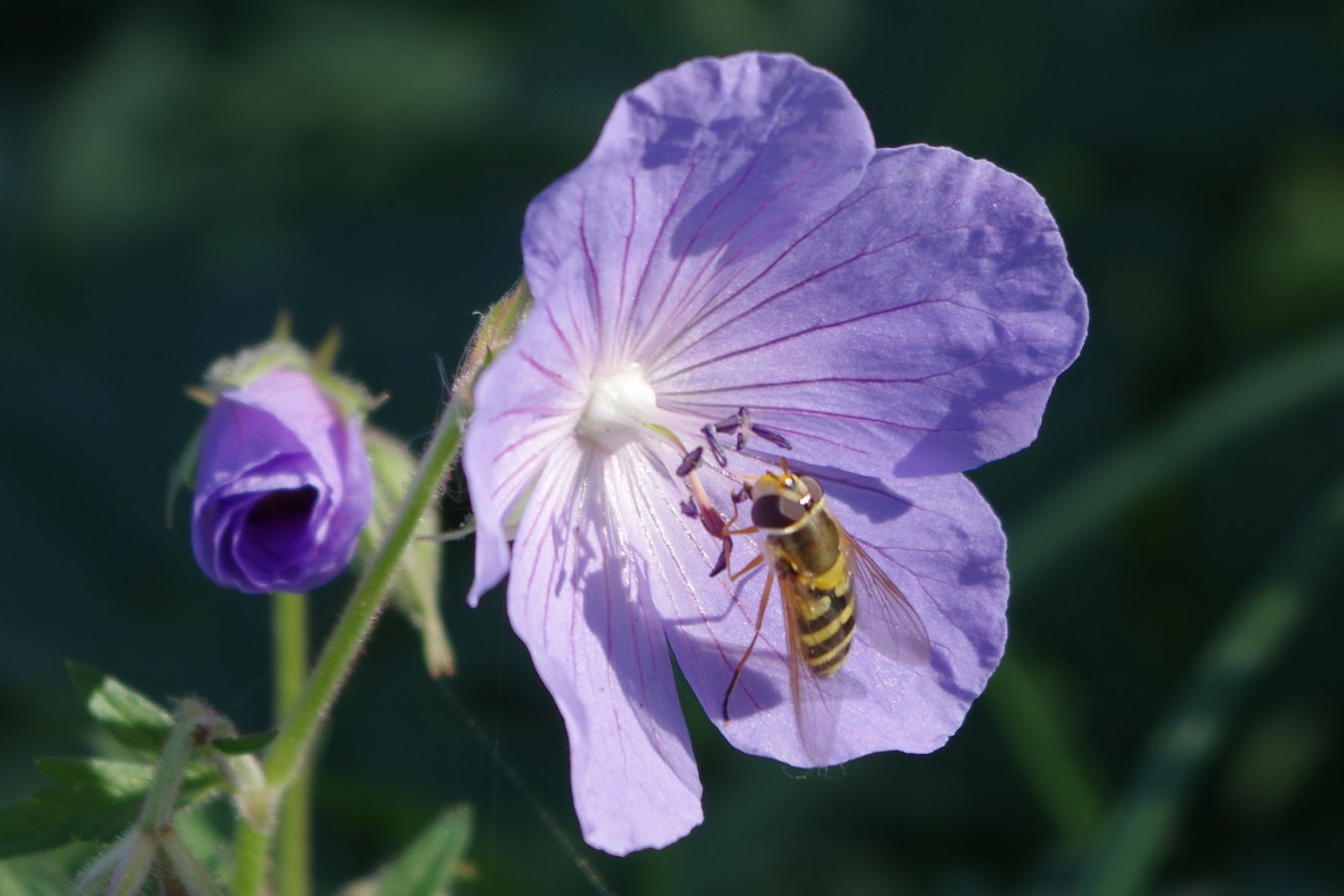
At the end of the month, I cut through Hempstead Meadow Nature Reserve and found plenty of flowers still out including a blue,
Meadow Crane's-bill.
 |
| Hoverfly (Syrphus ribesii) on Meadow Crane's-bill. Hempstead Meadow. |
October
In the run up to Halloween I expect to hear much talk about
bats and other spooky things but I don't expect to see real ones. However the long, late summer brought us two surprise visits. One on October the 18th at about 6:15pm when we saw three dancing in the fading light and another at about 5pm on October the 30th.
 |
| Autumn leaves and Halloween decorations. |
November
A grim month in all sorts of ways. At the start of the month fog swept in closing both Gatwick and Heathrow and on the 21st there were snowflakes in the rain. Even the foxes that regularly visit our garden stayed away for most of the month.
 |
| One of the few fox visits in November. Manor Park garden. |
December
In the run up to Christmas we had a few visits from a fallow deer with fine antlers. This is probably the lighter of the two bucks that we saw earlier in the year. Sadly the darker one wasn't with him.
 |
| Fallow buck, Manor Park garden. |
Christmas is a time when we traditionally bring greenery inside. I'll leave you with the lovely Nordman tree that I bought from Vulcan Farm.