Showing posts with label oak. Show all posts

Tuesday, 29 September 2020

BSBI Garden Wildflower Hunt - 6th (Last) Survey

 On the 13th of September, two and a half months after the 5th survey, I completed the 6th and final survey of our garden wild flowers.  Previously, I had been doing surveys once every few weeks but the rush of growth has slowed right down and I had to wait for the new plants to grow big enough for identification.

This time, there were just four new species to add to the list.

Fat hen

The first of these was Fat-hen (Chenopodium album). According to to Mabey's Flora Britannica, this member of the spinach family, was a popular crop during pre-historic times. 


Another was Junglerice (Echinochloa colona), which was growing near the bird table - maybe this came from the bird seed.  The other two newcomers to the list were Red Clover (Trifolium pratense) and Goat Willow (Salix caprea).

Many of the plants, I recorded as flowers in spring are now fruiting.  


The hawthorn (Crataegus monogyna) has fine red berries.


Blackthorn (Prunus spinosa) berries have a gentle blue bloom.


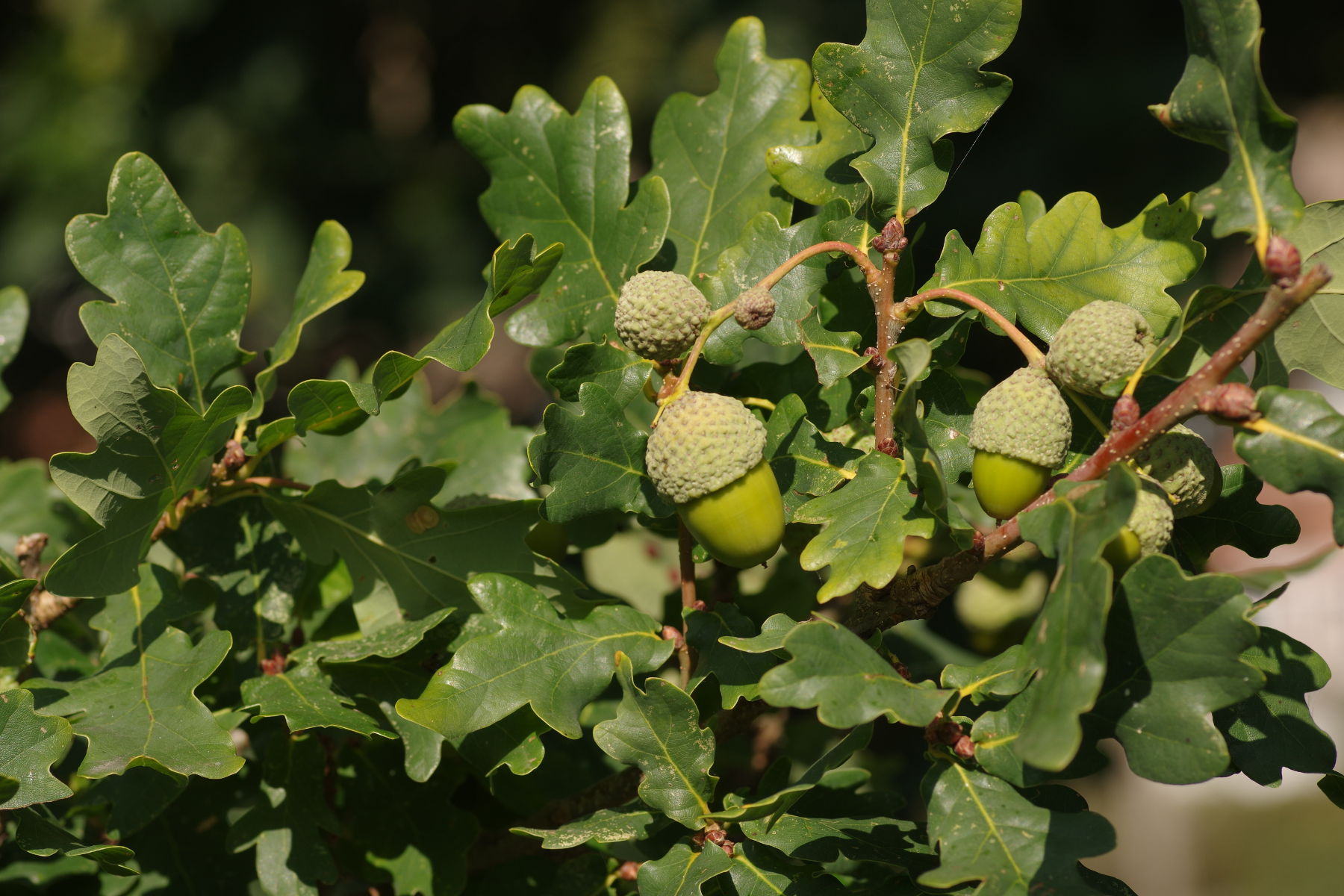
The Acorns (Quercus robur) have reached their full size.


Meanwhile, some summer flowers such as Catsear (Hypochaeris radicata) have kept on flowering for weeks.


There has been some very unseasonable behaviour from some spring flowers. The Marsh Marigold (Caltha Palustris) is having a second flush of flowers.  In the Uckfield area, I have seen both hawthorn and apple in blossom.


For the BSBI Garden Wild Flower Hunt, I have recorded a total of 107 species of wildflowers and plants, of which:

  • 79 probably occurred naturally in our garden
  • 28 were sown or planted.

I was amazed to get so many - especially finding species that I had not noticed before.  The other surveys were:

Saturday, 6 June 2015

30 Days Wild - Days 1 to 6 - Squeezing in

When I first heard about 30 Days Wild, a challenge in which you do something wildlife related, my heart leapt. Then it sank. I knew it was starting on the 1st of June, the Monday of what was going to be an exceptionally busy week. Surely I would never be able to fit it in.  I decided it would do no harm to try and squeeze in some nature observations while I went about my working week.

Monday, June 1st

I took my phone meeting in the garden. Buzzing bees and chattering sparrows are nicer than a screeching printer! I saw white-tailed bumble bees like the one shown, a tree bumblebee and a marmalade hoverfly on the weigela next to the bench I perched on for the call.
White-tailed bumblebee on the weigela next to our garden bench.

Tuesday, June 2nd

Just before leaving for Birmingham I tweeted that I was feeling and hearing the awesome power of the wind as I watch it toss oak branches. When it became apparent that - in the words of Southern "Tree on the line in the area which has caused damage to a Train as well as some damage to a rail." and that London Bridge was partly closed causing significant delays - I was less impressed.

Wednesday, June 3rd

I enjoyed watching house martins under the eves of my Birmingham hotel.
House martins' nests under the eves of The Arden.
This seemed a particularly miraculous "spot" as the hotel is adrift in a business park bounded by a dual carriageway, a mainline railway and the airport. As I walked to work, I noticed that one of the office buildings had house martins darting under a ledge. I met a fellow hotel guest, who was watching these birds and told him about the hotel nests. In return he showed me photos he had taken in his home country and told me about the birds he had seen in pond at the back of our building.
 
Thursday, June the 4th

Thursday was always going to be tough. I didn't have time during the day and I got home about 8:30pm.  After watching Springwatch and the continuing saga of Spineless Si the stickleback (this clip shows Si before he got his colouring from about 0:15), it was lovely listening to the birds singing their twilight songs while looking at Jupiter in the West.

Friday, June the 5th

I enjoyed running my hands over the craggy textures of a birch tree too big to get my arms round.
 
Birch bark
Saturday, June the 6th
 
I needed to go down the town anyway so decided to make a detour so I could walk through Lime Tree Avenue where I enjoyed the play of light through the leaves of ancient Limes.
Lime leaves.

I also swung through the Hempstead Meadow nature reserve. I remembered being told there were sticklebacks in the stream and decided to look for them. I found one drab-looking fish and a tiny baby in a rather muddy pool populated with skeeters, whirligig beetles and tadpoles.  Then I saw Uckfield's very own Stickleback Si near some flag irises. I could see his red tummy and I was delighted to see him duck into his tunnel nest for a moment. I also found myself explaining about the sticklebacks to a couple of walkers who were wondering why a middle-aged woman was sprawled over the bridge with her head through the bars.
 
Flag Irises near the stickleback stream.
So the first six days was about grabbing bits of time and having a fellow feeling for the wildlife that has squeezed itself into our lives by finding a niche in our built environment or occupying the slivers of land left when the estates grew up around avenues of trees and water meadows.

Sunday, 31 May 2015

Garden Bio Blitz 2015

It's the end of May and it's time to record as many wild species I can find for the Garden BioBlitz.

Marmalade hoverfly on a garden poppy.
I did my first BioBlitz last year and was surprised by the number of different wild species I found in our garden and how little I knew about them.  I have often seen hoverflies, like the one shown on the poppy, around the garden but had never particularly looked at them or realised that there were many different species.  I set myself three objectives for this year's BioBlitz:

1. To spot more species last year's score of 105.
2. To do a better job of identifying them - I was OK on flowering plants but otherwise my 105 species included too many that I was very unsure about. This included taking more photos for reference.
3. To identify more minibeasts - insects, crustaceans etc.

Early bumblebee with 'bed hair'.
The day started cold (it went down to 3 degrees C overnight) but bright. Having worked late on the Friday evening, I could relate to the early bumblebee in the photo, which slowly and unwillingly clambered out of the allium flower it had slept in overnight.

I started by checking off the wild flowers I had listed last year. I was indignant when I realised that many of them had been browsed off by two fallow deer who had visited a couple of days previously. Fortunately the deer had done the decent thing and left enough for me to identify the plants and, judging from fresh droppings, popping back on the night before/early morning of BioBlitz day.

Caught in the act.
Throughout the day, I was able to see how others were doing by following the #gbb15 hashtag on Twitter. Although I was working on my own, I felt like I was part of a team working on a joint project because we kept tweeting photos and commenting on each other's progress.

I was particularly pleased to see @DaveyManMcG tweet "Loads of honey bees & a few tree bees on my cotoneaster". This unregarded little shrub with its tiny flowers seems to be great for bees. Ours was covered in honeybees, tree and early bumble bees.

Tree bumblebee on cotoneaster
He has posted about his Garden BioBlitz on his Lancashire and Lakeland Outback Wildlife Safaris blog. I was amazed that he still had bluebells looking good at the end of May. In Sussex, ours peaked at the start of the month. It sounds like they had pretty challenging weather. Ours was OK but colder and windier than you would expect at this time of year so I didn't see many of the hoverflies that have been buzzing round our garden lately.
 
I am finding that social media is transforming my ability to observe and understand wildlife. I am learning so much from others. When I found out how many species of bees and hoverflies there are, I was fairly daunted by how difficult it would be to identify the creature that was in front of me. However there are loads of helpful resources online. Recently, I have found following Facebook groups very friendly and helpful:
So instead of being stranded by myself with books full of similar looking creatures, I can put a photo in the group and people, including experts, will help me identify them.
 
Back in the garden, I decided to try something I saw on Springwatch a few days previously. One of the presenters explained how many creatures could be found in an oak tree and shook a branch over a tray. He got several caterpillars and I got ... a disappointing rain of tiny bugs that I couldn't hope to identify and a fallen bit of leaf. Then I looked closer ...
 
Light emerald moth.
The leaf was a beautiful moth. It's light green colour and white 'veins' looked just like the back of an oak leaf. Then I looked some more and found a jaunty little yellow and black bug.
 
Dryophilocoris flavoquadrimaculatus bug from our oak tree.
I carried on poking around in the garden until the clouds rolled over and all sensible creatures including myself headed for shelter. I spent the evening processing photos and figuring out what I had found.  I entered my results on Sunday and was pleased that I had met my objectives, having:
  • identified 127 species
  • improved the accuracy of my identifications and added photos to enable verification
  • increased the number of 'minibeasts' identified - I have actually doubled the number of insect species in my count.
Breakdown of my BioBlitz Results.
When I finished at about 2:30pm, I was delighted to find that I was 3rd on the league table for the results overview. Of course, others will soon overtake me but it'll be nice while it lasts!
 
Overview of BioBlitz results at 2:30pm on Sunday.
I was intrigued to see that other results were building up for East Sussex. My 127 had contributed to a total of 141 species at that point.  I went into iRecord proper to find out what was going on. 
BioBlitz records in iRecord.
It seems that people have been doing a National Trust BioBlitz at Birling Gap.  Obviously their results are going to be very different - Birling Gap is right on the coast, is chalky and is a much more natural environment.  However, as their list has built up, it has been intriguing to see some similarities with mine.

Red tailed bumble bee was found in both Birling Gap and my BioBlitz.
Back to my own garden, I was pleased that some our garden minibeasts have become familiar enough to name on sight and I can identify some of the more distinctive creatures without too much trouble. However, I'm still struggling with many of them and have a lot to learn.  Also, after one little shake of an oak branch revealed two such pretty creatures, I really want to know what is going on in the canopies of our trees and who lives there.

Sunday, 21 July 2013

Baby frogs and lammas leaves

The frogs spawned late, about the 6th of March and then we had a blackthorn winter. After the snow and ice had cleared the spawn looked rather sick and wrinkled. After not seeing any tadpoles I gave up hoping for young frogs this year. On the 20th of July I was delighted to see a hand full of froglets scrambling round the bottom of the kingcups.


Lammas growth, photographed on July 21st
At this time of year we see a flush of new growth on our oak tree. Unlike the acid green new foliage that first appears in spring this is red tinged. These leaves grow around Lammas day, August 1, which is the festival of the wheat loaf (Anglo-Saxon hlaf-mas, "loaf-mass"). Lammas growth appears in a variety of tree species. According to Wikipedia
This secondary growth may be an evolutionary strategy to compensate for leaf damage caused by insects during the spring.
After the manic spring breeding season, July and August always feel like a time when not much is happening in the garden but subtle changes are still happening and are worth looking out for.