Monday, 27 May 2019

Plants of Victoria Pleasure Grounds

Last year I did surveys of four of Uckfield's recreational areas. This year I have decided to investigate Victoria Pleasure Grounds.  I haven't explored these before but they appear large and well managed - balancing the provision of sports pitches with more natural areas. So far I have paid two visits, one at the end of April and the other at the end of May.

Daisies alongside the sports pitch - 26 April 2019
The photo above shows daisies next to a sports pitch in the original Victoria Pleasure Ground. The beacon is used when celebrating or commemorating important events such as the end of the first World War.

Hedge and bank with wild flowers at the bottom of the park - 26  April.
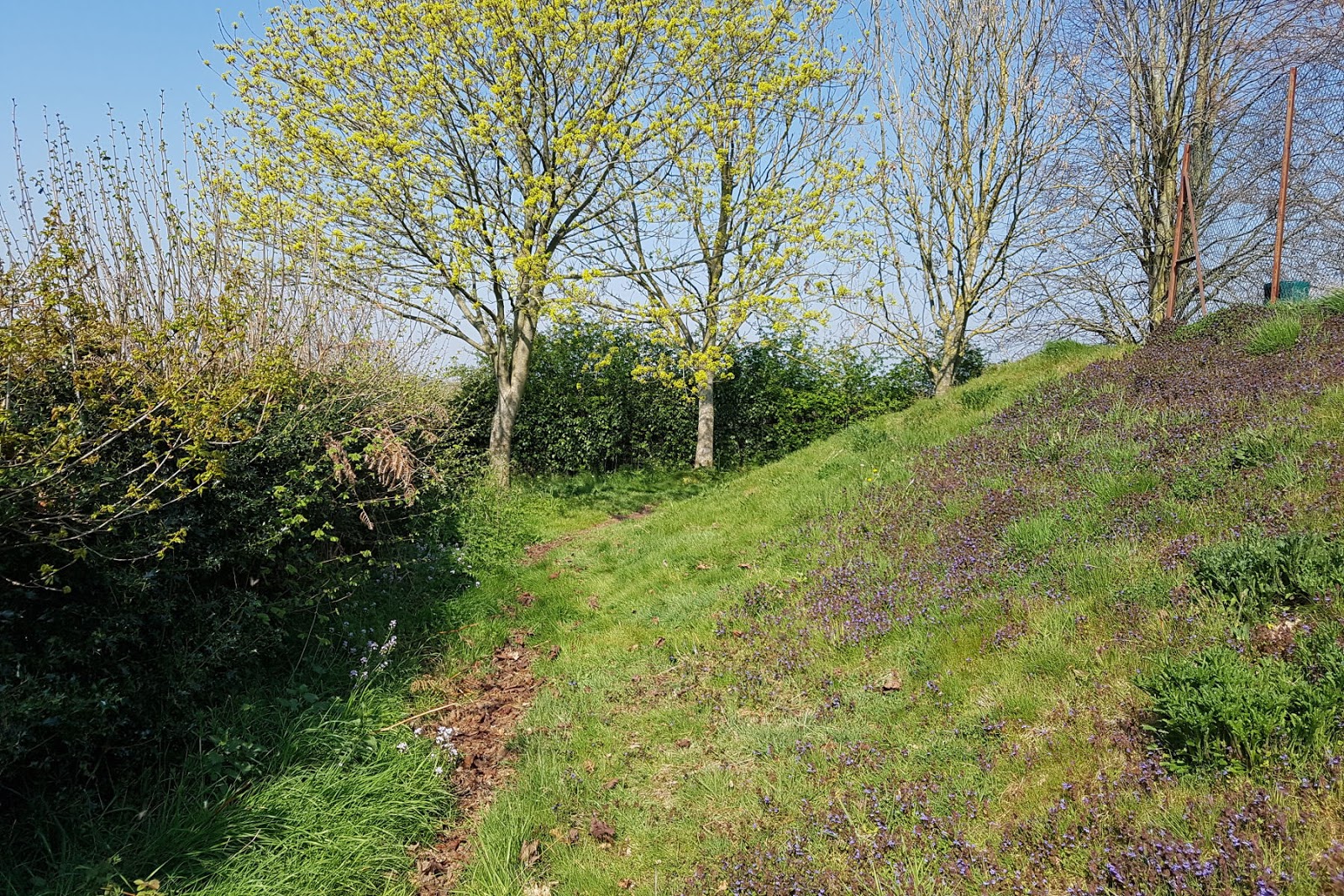
From a nature point of view, one of the most interesting features is the hedge that wraps round the bottom of both the Victoria Pleasure ground and the newer part, with the skateboarding area.  The purple you can see on the photo is Ground Ivy, which was providing a handy meal for all sorts of pollinators.  A month later and the slope is covered with Ox-eye daisies, Birds-foot-trefoil, Greater Stitchwort and many other wild flowers.  Birds were flitting in and out of the hedge, presumably catching insects for their young.

Dog Rose in hedge, 26 May 2019
Moving into May and the Hawthorn and Blackthorn blossoms have faded but the hedge is now decorated with other flowers such as Spindle and Dog Rose.  I was thrilled to find such a variety of plants as this is usually the sign of a really old hedge.

Red Campion, 26 May 2019
Following the hedge round the corner, I found a little wooded area next to the skateboard track. At the end of April, this contained bluebells and primroses. Now it has Cow Parsley and Red Campion.
The park also contains an area of Alders and runs alongside Boothland Wood, which meas that it contains a fair amount of woodland flora.

Buttercups and Yorkshire Fog grass - 26 May 2019.
The grass between the sports and recreation areas has been allowed to grow and there is an interesting variety of grasses and grassland flowers. The photo above shows buttercups growing amongst pinkish Yorkshire Fog grass.

Malachite Beetle on a buttercup - 26 May 2019.
Although I was doing a plant survey, it wasn't just about the flowers. While I was searching for flowers, I would hear a Chiff Chaff and when I was looking at the buttercups I found some beetles.  Unfortunately my photo doesn't quite capture the almost metallic "British Racing Green" of the Malachite beetle.

Tall Ramping Fumitory.
During my April visit I even managed to find a rare (for Sussex) plant. The Tall Ramping Fumitory is a rather weedy-looking thing but it has been recorded in only a few parts of Sussex. Uckfield has now been added to that list.

Wheat field - 26 May 2019.
I managed to get a photo of the crop on the other side of the hedge that I mentioned earlier. There is going to be a great deal of development nearby. However, this field doesn't appear to be included in the plans. I found myself wondering what would happen to it.

Sunday, 10 March 2019

Mosses at Henfield

The Henfield Field Meeting is way out of the Uckfield area but most of what I learnt will apply closer to home.  Brad and others generously shared their knowledge with the rest of the group and these notes cover just a few of the species of moss that we found. Identification is quite tricky but there is much to enjoy in the different shapes and textures of these tiny plants.

After gathering in the car park we crossed the London Road and headed down Cagefoot Lane.

Didymodon Insulanus (Cylindric Beard Moss)
The first stop was by a seat by a mossy area of asphalt. Surprisingly many mosses colonise this type of surface.  The Didymodon Insulanus has:

  • quite long leaves
  • an almost swirling appearance 

Homalothecium sericeum (Silky Wall Feather-moss)
Next stop was an old wall. On the opposite site of the lane was a hedge with light-coloured violets at its feet. I was fascinated by the patterns made by the shapes and patterns made by the Homalothecium sericeum on the richly textured old wall.

Bryum capillare (Capillary Thread-moss)
In complete contrast to the sprawling feather moss was the neat little cushion of Bryum capillare shown above.

Blue Plaque commemorating William Borrer
According to the Sussex Botanical Recorders Society's newletter notes:

William Borrer is one of the most important Sussex botanists, and his vascular plant records and introductions in the Henfield area are well known. Though we have some of his bryophyte records in the county, there are none for Henfield.

Hopefully today's meeting will have fixed that!

The mossy grass by the pond with Borrer's house in the background
In the mossy grass by the pond we found two common lawn mosses:

  • Calliergonella cuspidata (Pointed Spear-moss) - a feathery moss with red "stems" and spear-like ends to its branches
  • Rhytidiadelphus squarrosus (Springy Turf Moss) - it too had red stems, but its leaves were bent back, which to me, made it looked like so many pipe cleaners

Polytrichum juniperinum (Juniper Haircap)
In the grounds of a care home, there were some wonderful old trees with mossy trunks. In the grass, we found patches of Polytrichum juniperinum, whose brown-tipped leaves helped us identify it.

Then we made our way down Blackgate Lane and found a patch of asphalt that was covered in brownish Didymodon nicholsonii (Nicholson’s Beard-moss). The Nicholson of the name was a botanist from Lewes. The leaves are quite stiff and translucent and the ends are shaped like the prow of a ship.

As we made our way down lanes and paths, the buildings of the village gave way to farmland. Surprisingly, we even found mosses in fields that had been used to grow corn on the cob.

Atrichum undulatum (Catherine's Moss)
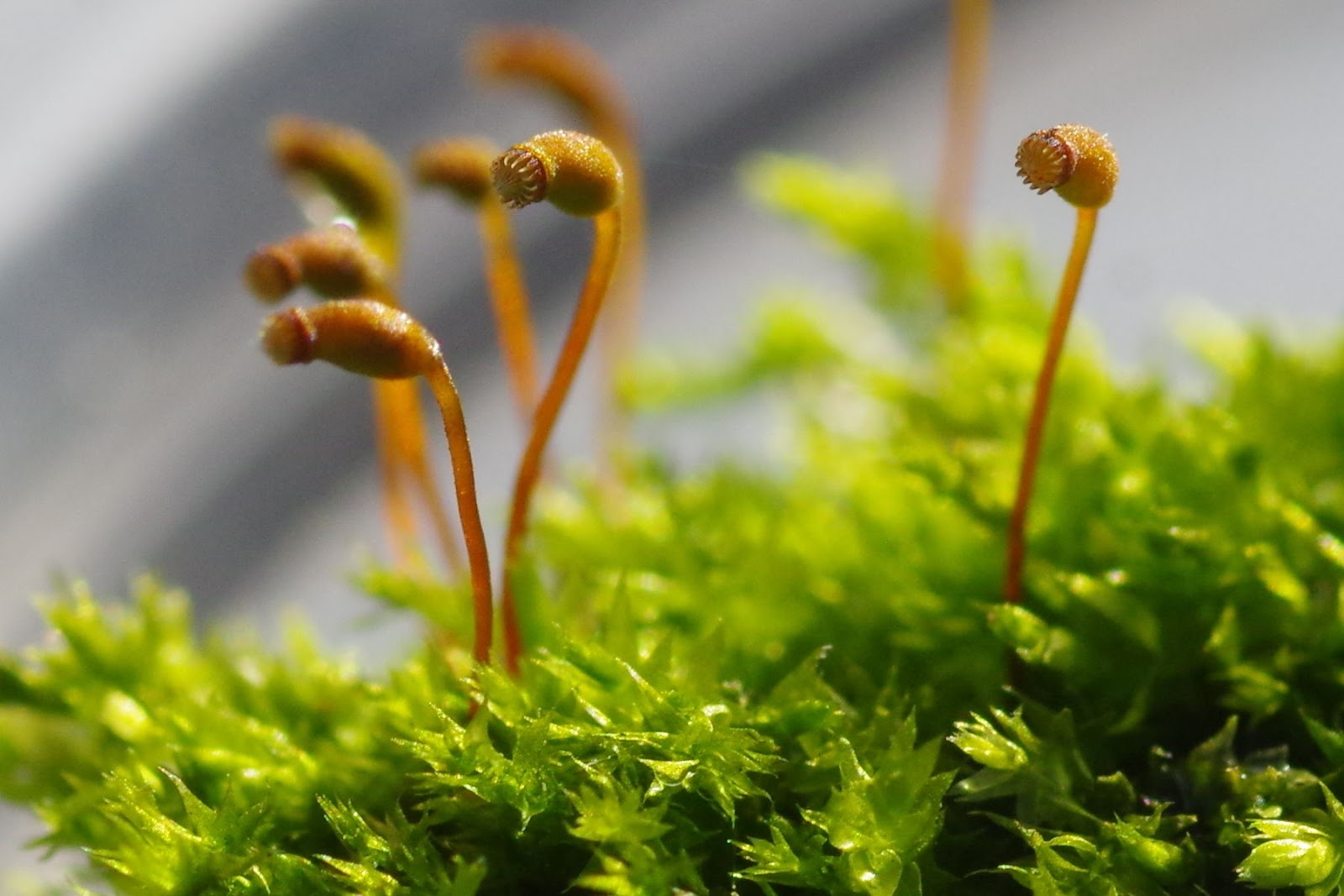
I was very pleased when I found a moss myself, even if I did totally misidentify it!. The Atrichum undulatum has wavy leaves and, as can be seen from the photo, a distinctive upright fruiting body.

Hazel catkins dancing in the wind.
We lunched in a sheltered corner and I enjoyed chatting to the others and watching the hazel catkins dancing in the wind.  After this, I and one or two others decided to go back while the rest continued with the field meeting.


Sunday, 3 March 2019

Lime Tree Avenue work on a rainy day

After some exceptionally sunny February days, Storm Freya was already making her presence felt when we (the combined forces of the old Lime Aid group and Brighter Uckfield) started work on the 200-year old Lime Trees in Lime Tree Avenue.

Lime Tree surrounded by epicormic growths before trim
Over the year since the last trim, these hybrid Lime Trees grow a forest of stems (epicormic growth) round their feet. Left unchecked, these would create an impenetrable forest that would sap the strength from the top of the tree.

Lime Tree - After Trim
I find it extremely satisfying to strip away these growths.  I just did one and a bit trees but the group as a whole, which had started on the previous day, managed nearly all of the hundred plus trees in the Avenue.

Wild Arum and Cow Parsley leaves
While I was working, I noticed the leaves of wild plants growing in the shad of these marvellous trees. The photo shows the young leaves of Wild Arum and Cow Parsley.

Sweet Violets - photographed in sunnier weather
Other plants that grow in the Avenue include Primroses and Sweet Violets.

White Lipped Snail
While I was working I found a couple of spiders, which I rehomed in the sticks piled up by the hedge, and some White Lipped Snails. I enjoyed music while I worked too. A Robin was singing nearby and a Great Tit was giving its "Teacher, Teacher" call.

Clustered Feather Moss
Lime Trees Avenue provide a habitat for all sorts of plants and creatures. Lately, I have been taking more of an interest in mosses. Identifying them is tricky but it is interesting to look at them under a magnifying glass - the one photographed was on the bottom of one of the tree trunks and looks like a group of minature cobras!

Saturday, 16 February 2019

Biological Recorders' Seminar 2019 - Sussex Biodiversity

As the media fill with news of massive insect declines and the children's climate strike, I attended this year's biological recorders seminar.

Biological recording is simply noting down which plants and creatures that I see. Often I do this casually, while I go about my business and sometimes I take part in public project such as the New Year Flower Hunt.  The tool that I use most often is iRecord, which is available both as a website and an phone app. The latter is really easy to use because it figures out the location for you. Once they are in the system, they can be searched and used.

Some of my Uckfield iRecord results.
Before the seminars had even started, I found a great poster about Gill Valleys created by the University of Sussex River Ouse Project. Apparently there are some of these very near Uckfield but they are on private land, so it is difficult to get access to them.  Sussex Gills are steep-sided valleys in sandstone and mudstone areas. The habitat is usually undisturbed and has a rich variety of flora.

Frog in my Uckfield garden

It was with great pleasure that I found myself sitting next to "Agent Amphibian" who brings great style and imagination to the serious subject of amphibian conservation. A few years ago, in Brighton, I saw her TED talk on the subject. Later in the day, by the Sussex Amphibian and Reptile Group's stand, we and another had quite a chat about frogs and toads and when I mentioned that I was from Uckfield, talk turned to the Harland toads - it seems that they are famous! If you want to know more, visit the Harland's Pond Toad Rescue Facebook group.

30 Years of the Sussex Biological Recorders' Seminar

Tony Whitbread outlined some of the thrills and spills of the seminar over the 30 years in which it was running. We can't know what questions we will be asking in 20 years time, so we must collect data ready for when it is needed.

The Seals of Chichester Harbour


John Arnott gave a talk about the Common and Grey Seals of Chichester Harbour. The first record was in 1993 and their main haulout (rookery) is at Oar Rithe. The name Selsey comes from Seals-ey, which means isle of the seals.

Fungi of Lullington Heath

Martin Allison gave a great talk about Lullington Heath. It is unusual because it is chalk heathland, which has got both acid-loving healthland plants (heathers) and chalk-loving vegetation (Roundheaded Rampion). When grazing was stopped, this important habitat started being overtaken by scrub. Grazing has now been resumed. He explained that Waxcaps are often found on downland grassland.

Oily waxcap in Uckfield's Holy Cross Churchyard
Waxcaps are indicators of high quality, nutrient-poor grasslands, which are precious for various types of insects as well as fungi and plants. I found out, when doing a Churchyard survey, that these can preserve this type of habitat.


Some fungii such as Clouded Funnels make fairy rings. One lovely story is that shepherds would not allow their sheep to graze within fairy rings for fear that they would become enchanted.

Also, pony poo fungus was common in Victorian times but is rare now due to modern ponies being given treatments of various sorts. However, because conservation ponies are living in a more wild way, it is making a small comeback.

UK Seed Conservation at the Millennium Seed Bank


Stephanie Miles and Jenny Peach outlined projects at the Millennium Seed Bank (MSB) at Wakehurst. MSB has now conserved 98% of UK species. As well as collecting the seeds, they use them for conservation, restoration and educational projects - for example Marsh Gentian seeds have been used at Chailey. One of their projects is preserving the Spiked Rampion flower, which is present at 8 sites in Sussex - it is found on roadside verges and in coppiced woodlands.

Bryophyte Recording in Sussex


Wall screw moss (Tortula muralis) - Uckfield High Street, Feb 2019
Brad Scott talked about Bryophyte (mosses, hornworts and liverworts) recording in Sussex. Bryophytes are important because they are pioneers - they get the vegetation going. Records go back to the 1600s. In 1840s, it was already being noted that some habitats were drying out. To my surprise, one of the slides listed me as a contributor to the records - I haven't recorded that many and only easy species such as the Wall Screw Moss (Tortula muralis) suggested by the Sussex Biodiversity species of the month page

Here at last! Otters in Sussex

Otter print (left) from Mammal Society tea towel.
The big 'aww' moment came when Fran Southgate showed photos and videos of otters, including youngsters, in Sussex.  Fran described the types of "field signs" (prints and poo) to look out for:
  • prints show five toes and cannot (unlike mink's) be covered with a £2 coin
  • poo has a fishy-jasmine smell and is crumbly with no curl at the end.
A couple of years back there was a lot of excitement when someone thought that they had seen an otter family on the Uck but cooler heads realised that they were mink.

The Sussex Local Wildlife Sites Initiative

At last year's seminar, Clare Blencowe, outlined the Sussex Local Wildlife Sites initiative. This year, Daniel Watkins  and Henri Brocklebank outlined how this has become a reality. Daniel is the Local Wild Sites officer and both collects evidence  and provides advice to landowners about managing these sites - 637 in Sussex. Henri emphasised the importance of a network for protecting these and other sites:
  • When new planning policies threatened to leave these sites unprotected, a petition was organised, which succeeded in gaining protection for them
  • For the public to be the Wildlife Trust's eyes and ears and passing on information about threats to these and other sites.

Collection and analysis of grasshopper and cricket records in Britain

Bjorn Beckmann and Ralph Hobbs talked about recording grasshoppers and crickets. Sussex has 26 of the 31 UK species:
  • 8 (of 11 UK) grasshoppers
  • 3 groundhoppers
  • 12 bush crickets
  • 3 (of 5 UK) crickets
Lesser Marsh Grasshopper - Uckfield Garden
Again, this appears to be an area where a little effort on recorders' part can make an impact because I only record grasshoppers and crickets casually but my name was mentioned as a contributor. 

Earthworms: the state of the nation and more


Emma Sherlock gave a very lively talk about Earthworms and the National Earthworm Recording Scheme. There are 29 UK species and their roles include:
  • Edeniac - composter
  • Epigeic - on the surface - e.g. the red ones you find under pots
  • Endogeic - soil worms - pale
  • Anecic - deep burrowing worms - up to 40cm

Takeaways

As I looked through the newspaper on the bus home with news of the children's strike, I found myself reflecting on Tony Whitbread's opening words about the power of uniting rebellious youth with cantankerous old gits! I am, of course, firmly in the latter category. He had pointed out that the apparently simple, pleasant act of recording wildlife provides evidence for action. Recording is a political act.

Over the next year, I intend to:
  • Go on with my rather haphazard, semi-casual recording - as it is making a genuine contribution to some of the less recorded groups such as grasshoppers and mosses.
  • See if I can get reports on the flora and fauna in the Uckfield area.
  • Find out more about local wildlife sites in and around Uckfield.
  • Do another playing field plant survey. I am tempted by Victoria Park although the size of it is rather daunting.
  • Find a Gill Valley.

Saturday, 2 February 2019

2018 - Adding New Species to my List

I like to record the insects and other wild creatures that I encounter using tools such as iRecord. I also do plant surveys for the Sussex Botanical Recording Society.  Most of my observations were done in and around Uckfield (Sussex) and Leatherhead (Surrey).

In the dreary cold of a murky January, it seems impossible to imagine that my nature recording was seriously hampered by an implausibly hot summer. Most of insects that I like to record were largely absent and, to be honest, I was unwilling to leave the house except for some early morning plant surveys.

Hawthorn on the Dene, 7 May 2019, the start of a long, hot summer.
This year I recorded about 315 species of which nearly 80 were new to my lists.  Considering the weather conditions this doesn't compare too badly with last year's 350 (with about 100 new).  I focused more on plant surveys than previously because doing this is relatively new to me and practising my identification skills is time consuming - especially for things like grasses that I have been guilty of ignoring in the past.

This post is going to focus on "firsts" - i.e. species that are new to my lists this year or ones that I am seeing in a particular place for the first time.

Silver-washed Fritillary in our Uckfield garden, 13 July
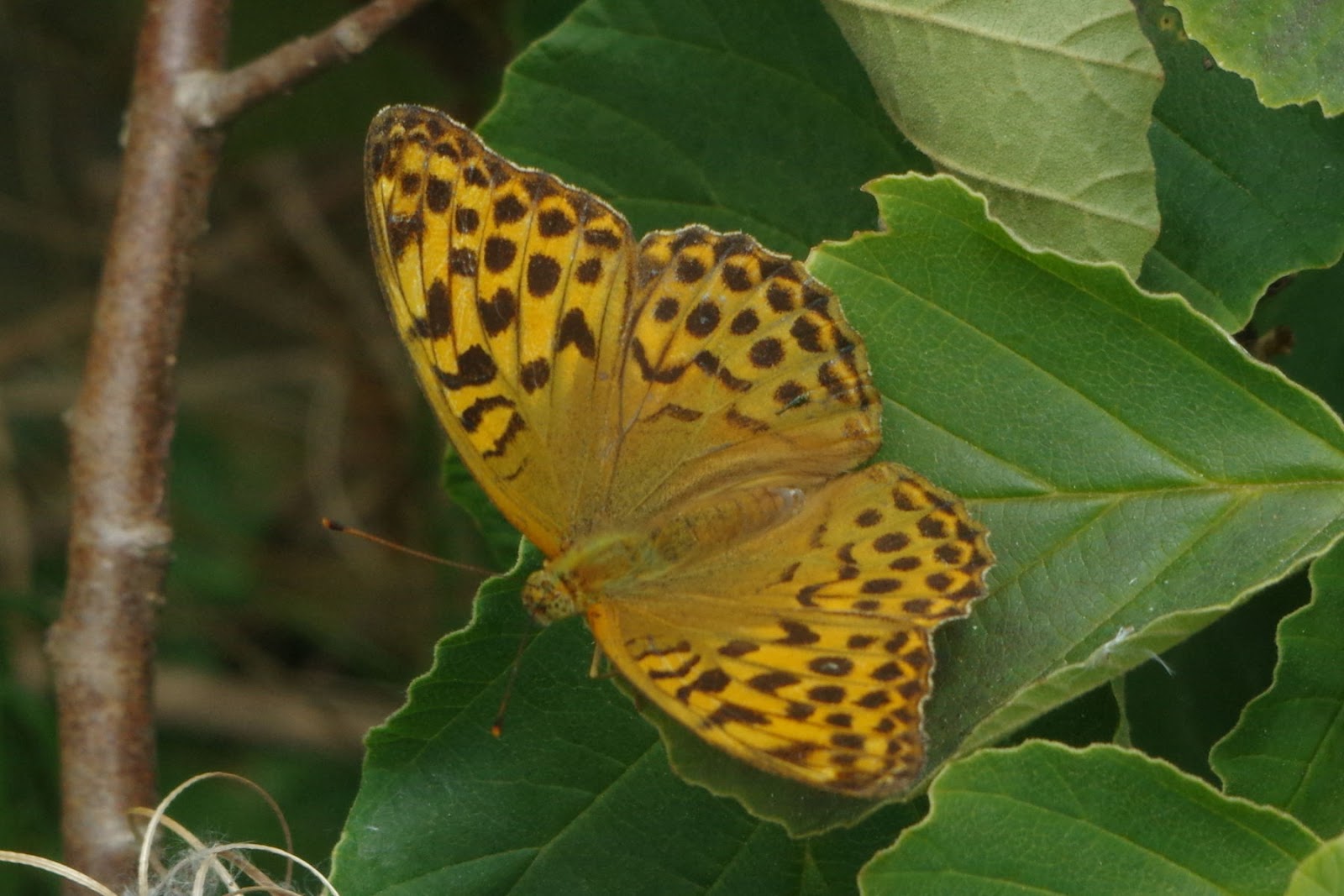
One type of insect that did seem to like the hot summer was butterflies and of my most pleasing sightings was a Silver-washed Fritillary (Argynnis paphia). This isn't new to my list but I had never seen one in Uckfield before and one came to our garden a few times in mid July. According to the Sussex butterfly atlas, it hasn't been recorded in our map square before. These are big, orange butterflies that live in woodlands and whose caterpillars depend on dog violets. For dog violets to thrive, there must be wide "rides" in the woodland that allows the sunlight to reach the ground when these flowers are growing. The Woodland Trust remove trees from the sides of certain paths in Views (Williams) wood to enable spring flowers to bloom and pollinators to feed on them. My guess is that this is where the butterfly came from but, of course, I don't know.

One new entry was due to my visits to Reading for work. Surprisingly, I often catch glimpses of Red Kites from the bus, quite close to the centre of the town. I never seen one in Sussex but they have been seen reasonably close to Uckfield in places such as Haywards Heath, East Hoathly so it is worth looking out for them. They are big, with a distinctive forked tail.

Magpie Inkcap, West Park, 28 October 2018
I was able to add four new types of fungus to the list - I recorded three of these, including the attractive and rather sinister-looking Magpie Inkcap (Coprinopsis picacea), on a fungus walk that I did with the Uckfield Nature Reserve Supporters group in the West Park Nature Reserve. Keep an eye on the Facebook group to find out about more walks.

Flea beetle, Luxford Field, 21 July 2018

While I was doing a plant survey on Luxford Field, Uckfield, I found the tiniest beetle that I have ever seen. It is a Phyllotreta, unflatteringly referred to as a flea beetle but it is nothing like a flea.

White Admiral, 5 July, Bookham Common, Surrey
While exploring Bookham Common in Surrey I encountered White Admirals (Limenitis camilla) for the first time, feeding on brambles. I had actually been looking for Purple Emperors (Apatura iris) and I was lucky enough to have one of those swoop by me as I walked along one of the woodland paths. In the more domestic environment of a Leatherhead Office, I saw my first Marbled White (Melanargia galathea). I'm told that, in the summer, you can see them by the dozen in Uckfield's West Park nature reserve. I live in hope!

Yellow Tail moth, Uckfield, 9 July
I saw 8 species of moth, including caterpillars, that are new to my lists. Given that there are over two thousand species of moth in the UK, it is not surprising that I keep seeing new ones. One of the prettiest this year was the dainty white Yellow Tail moth (Euproctis similis).

Juvenile Dark Bush Cricket, West Park Nature Reserve, 10 June 2019
While the Nature Reserve group was on one of its spring walks, I encountered my first Dark Bush Crickets (Pholidoptera griseoaptera). These were youngsters and there were about 10 of them.

Box Bug, Uckfield, 7 June 2018
I saw two new types of Bug. The one shown is a Box Bug (Gonocerus acuteangulatus) from our garden.  According to the British Bugs web site, it used to be very rare and found only at Box Hill in Surrey but has now expanded its range and become much more common.

Roman Snail, Leatherhead, May 2018
I only found one new type of mollusc but it was a whopper. I noticed the huge Roman Snail (Helix pomatia) while I was walking to work, along the River Mole, in Surrey.

Annual Beard Grass, 1 July 2019
This year, I have started doing plant surveys in earnest. I surveyed four of the local recreation areas and sports fields, contributing to nearly 80 new species for my lists. This has made me look much more closely at grasses. At our splendid local Uckfield Rugby Club, I found an Annual Beard Grass (Polypogon monspeliensis). This was not only new to me but new for the map square too.

Bog Stitchwort, sorry about the photo!
One of my favourite new plant species was the dainty Bog Stitchwort (Stellaria uliginosa). It was so small that, unless I was deliberately looking for plants, I would have missed it but the tiny flowers are exquisite and just like their bigger cousins, the Greater Stitchwort that we find in woodlands with the bluebells.

Saturday, 26 January 2019

Big Garden Birdwatch - 2019

This year's RSPB Big Garden Birdwatch was unusual because the birds didn't disappear from the garden the moment I started the clock. This time, my birdwatch started with me stalking my first ever birdwatch Wren at the front of the house, Mum was calling out "Robin, Starlings ... " and so on from the back.

My Big Garden Birdwatch results for 26 Jan 2019.
After the initial flurry of action, things settled down a bit and it was obvious that we were seeing some species in greater numbers than previously.

House Sparrows on our bird table
It was a particular pleasure to see a group of eight or more House Sparrows - the best score that I have had for this species.

Woodpigeon
We also had a group of seven Woodpigeons - again the largest score since I started. They were busy cleaning up under the bird tables after the smaller birds had scattered the food.

One of two Carrion Crows
I think many small birds were intimidated by the presence of two Carrion Crows in the oak at the side of the garden - even the Magpie flew away - so I went and had another look at the front.

Coal Tit in the front garden
I heard the Dunnock before I saw this modest-looking greyish bird. While I was looking at the it, two Goldfinches and a Coal Tit popped into view. At about the three quarter-hour mark I was getting a little concerned about the absence of Blue Tits as it would be the first year that I missed them. Mum said that they had been around during the week but, of course, that doesn't count. I enjoyed watching the secretive little Wren as it worked its way along a rather untidy hedge bottom and was rewarded by the appearance of a second.

Robin on the bird table.
I checked the bird tables and wires near the bird box but didn't see any sign of the Blue Tits. However, the Robin that regularly follows me round the garden came and posed for photos.

One of three male Blackbirds
I often see Blue tits working their way round the Oak tree. There were none around but a male Blackbird was in the tree, which, with the two already in the conifer, took me up to three.

Finally, as the last few minutes were ticking away, a lone Blue Tit appeared in the Robinia tree. This took my score up to 35 individuals from 12 species. This is the first time I have seen so many birds during the birdwatch - the previous high being 22 individuals. This was in 2011, which was also the only other year in which I saw 12 species.  I think that my totals were boosted by new glasses and bird watching techniques learnt from David of the Uckfield Local Nature Reserves Supporters Group but there were some genuinely bigger groups around.

This graph shows the ups and downs of my bird watches since 2011.  Last year's numbers were much lower.

The ups and downs of my garden bird watches