Biological Recording is noting, and sharing, information about the plants and creatures that we find. This knowledge enables wildlife organisations and others to map and help wildlife. Some recorders specialise in a particular group of species and others (like myself) record different types. I started recording fairly seriously when I did the
2014 Garden Bioblitz and record most of my finds in
iRecord. On the 11th of February, I attended the 28th Biological Recorders' Seminar, which was organised by the
Sussex Biodiversity Record Centre. There was a wealth of information, so I will just pick out a few items from the main talks.
 |
| Delegates gathering for the Chairman's Welcome. |
Record Centre update
Claire Blencowe explained:
- some of the challenges in the balance between the desire for open data (as now required by Natural England) and being fair to the recorders who have entrusted county centres with their records
- the contribution of Peter Hodge who provided approximately 50,000 beetle records in 14 densely written note books
- that they have recently been surveying Local Wildlife Sites (Uckfield examples are West Park and Snatts Road Cemetery).
Saltmarsh Recreation
Barry Yates outlined how they restored salt marshes at
Sussex Wildlife Trust's Rye Harbour nature reserve. They used a 1950s RAF photo as a guide to what they wished to achieve although they had to make some adjustments to fit in with modern developments. Systematic recording shows how successful the scheme has been.
Developing an ID resource with support from a museum
Chloe
Rose explained her contribution to creating a key to a particular type of wasp using the specimens kept at the Natural History Museum. She did this work as part of the
Identification Trainers for the Future project, in which trainees produce a range of materials designed to help support naturalists in their own identification work. So far they have produced keys for
grasses and
orchids.
Weevils
Weevils are a type of beetle. Characteristics include:
- a rostrum (snout)
- elbowed antenna, which are clubbed at the end
- heart shaped feet.
Mark Guerney has provided guides at
www.tinyurl/weevilguides and suggested that Twitter users follow .
 |
| Look out behind you! |
Forest Row Natural History Group
Tom Forward and Brad Scott said that the group:
- grew out of a meeting in a pub
- has monthly 'meetings', which are usually walks around the village area
- has regular talks
- gets involved with events such as national fungus day
- record flora and fauna in a 1km square, which embraces the community farm
- keep in touch through a Facebook page and their Nature's book website.
I have encountered this friendly group online through the
New Year's Plant Hunt and it was great to put faces to names.
Slugs, why bother?
Before the event, Chris de Feu had asked us to bring in any slugs that we found so he could identify them. So the day had started with a trail of people dutifully dropping off plastic containers with their slimy little finds and watching with fascination while Chris examined and identified them.
 |
| Iberian Three band Slug |
He said that if you wish to ID a slug from a photo, you should photograph from the following angles:
- underneath - maybe using a Perspex sheet
- right-hand side - so you can see the breathing pore
- above - to see the overall shape.
... and to answer the original question - very few people record slugs so we know very little about their distribution and how it is changing. Chris also found that people were very motivated by being able to put a new dot on the map, which is easier for an unpopular group. On the day of the seminar, Chris examined 119 slugs brought in by the public and had identified 17 of the 28 species found in Sussex.
The Sussex Butterfly Atlas
Michael Blencowe gave a highly entertaining talk about the creation of a new
Sussex Butterfly Atlas. The first person to note a proper record (with an exact date) was William Markwick, who recorded a Swallowtail in Catsfield on the 22nd of May 1770.
 |
| Small Tortiseshell - the regular resident, with black legs. |
Some points from survey:
- Meadow Browns, which have featured strongly in my own Big Butterfly Counts, were found in every single map square throughout Sussex.
- The spectacular Purple Emperor, which eluded many experienced recorders, was found in a cat litter tray - it likes poo
- The addition of Continental Swallowtails, Longtailed Blues and Scarce (Yellow Legged)Tortiseshells to the Sussex lists
- The loss of the Small Pearl Bordered Fritillaries from Sussex. Numbers of these butterflies spiked a few years ago but seem to have been wiped out by mild winters and wet Junes.
Scuttle, Spring, Slither and Slide
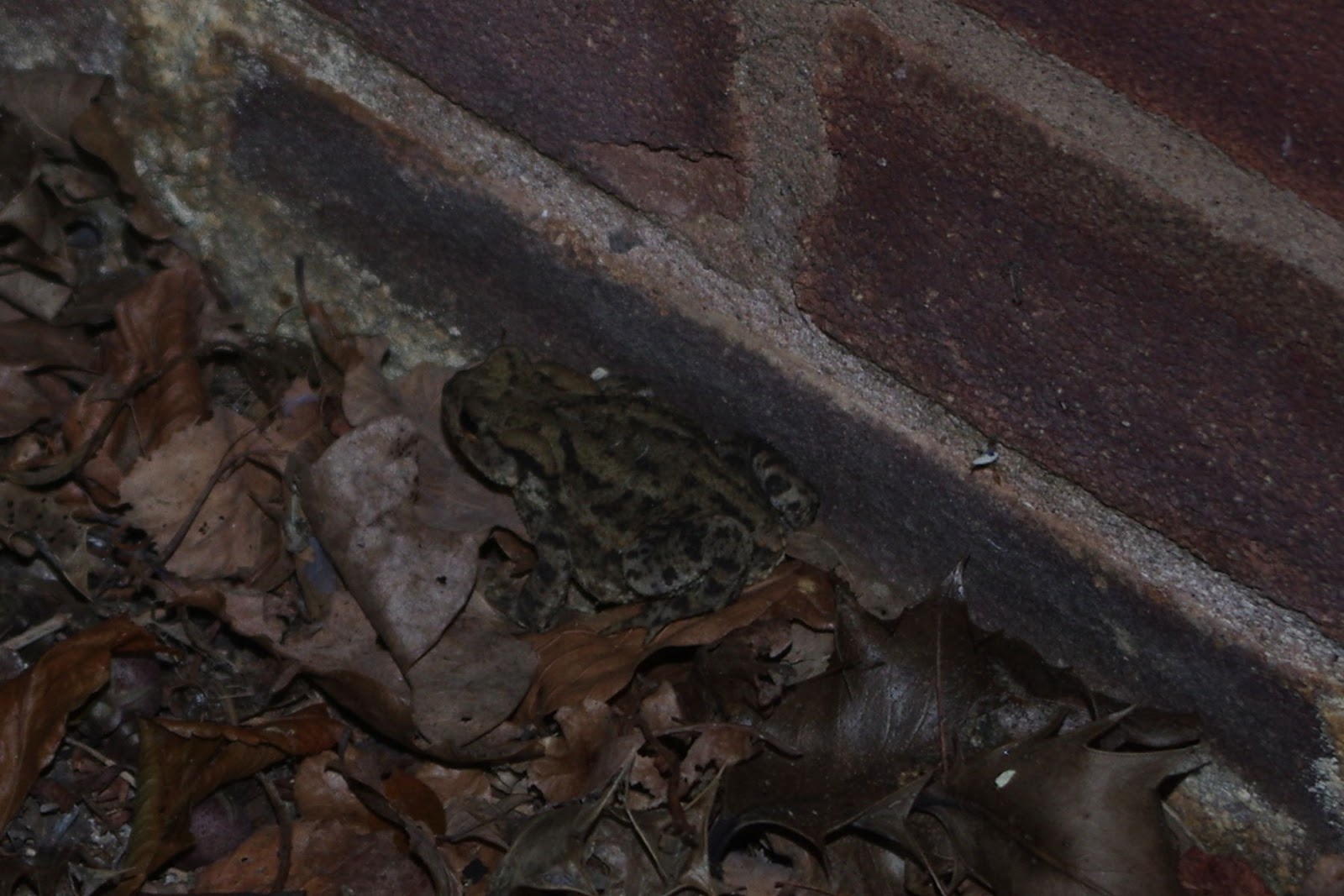
Paul Stevens emphasised highlighted that many familiar species such as the Common Frog are very badly under recorded and asked us all to record them. This can be important because, for example, it can highlight where amphibians have to cross roads to get to their breeding pond.
 |
| Frogs are beginning to emerge and need to be recorded. |
BN5 Owl Project
David Plummer gave an excellent account of the
BN5 Owl Project accompanied by his own spectacular photos. There was a wealth of detail. systematically collected over years, but the thing that really got my attention was the high density of Tawny Owls near the village itself. David suggested that they might be using the gardens and the corridor provided by the disused railway line. His tip for those using recordings to elicit owl calls was to use the recording then wait at least five minutes for a response as the presence of a human is likely to delay their reaction to the invader.
Summing up
My takeaways from the day were:
- The Sussex Biodiversity team have recently been surveying Local Wildlife Sites including those in the Uckfield area.
- It is important to record apparently common and/or insignificant creatures such as frogs and beetles. This knowledge will help wildlife organisations track changes in population and spot a decline or invasion.
- I can get help with identification from more places than I thought. In a future post, I will curate some online sources.
- Much of the best work is being done by amateurs. They are only amateur in the sense that they are not being paid for the work they have put in and the expertise that they have developed.
 |
| Robin in Hempstead Meadows Nature Reserve - 28 Jan 2017 |
Thinking about my own recording, it has been helping me enjoy nature more deeply:
- Because recording requires me to identify plants and creatures to a species level, I have learnt much more about identification.
- Now that I've built up a couple of years' worth of records in iRecord, it is easy to go back to an observation rather than scrabbling through old photos and journals.
- Using social media while taking part in recording events such as the RSPB's Big Garden Birdwatch has put me in contact other people who are interested in local wildlife.
- Being caught in the act of photographing a insect or peering through binoculars has led to local people telling me about their own wildlife encounters.