Showing posts with label Hawthorn. Show all posts

Tuesday, 29 September 2020

BSBI Garden Wildflower Hunt - 6th (Last) Survey

 On the 13th of September, two and a half months after the 5th survey, I completed the 6th and final survey of our garden wild flowers.  Previously, I had been doing surveys once every few weeks but the rush of growth has slowed right down and I had to wait for the new plants to grow big enough for identification.

This time, there were just four new species to add to the list.

Fat hen

The first of these was Fat-hen (Chenopodium album). According to to Mabey's Flora Britannica, this member of the spinach family, was a popular crop during pre-historic times. 


Another was Junglerice (Echinochloa colona), which was growing near the bird table - maybe this came from the bird seed.  The other two newcomers to the list were Red Clover (Trifolium pratense) and Goat Willow (Salix caprea).

Many of the plants, I recorded as flowers in spring are now fruiting.  


The hawthorn (Crataegus monogyna) has fine red berries.


Blackthorn (Prunus spinosa) berries have a gentle blue bloom.


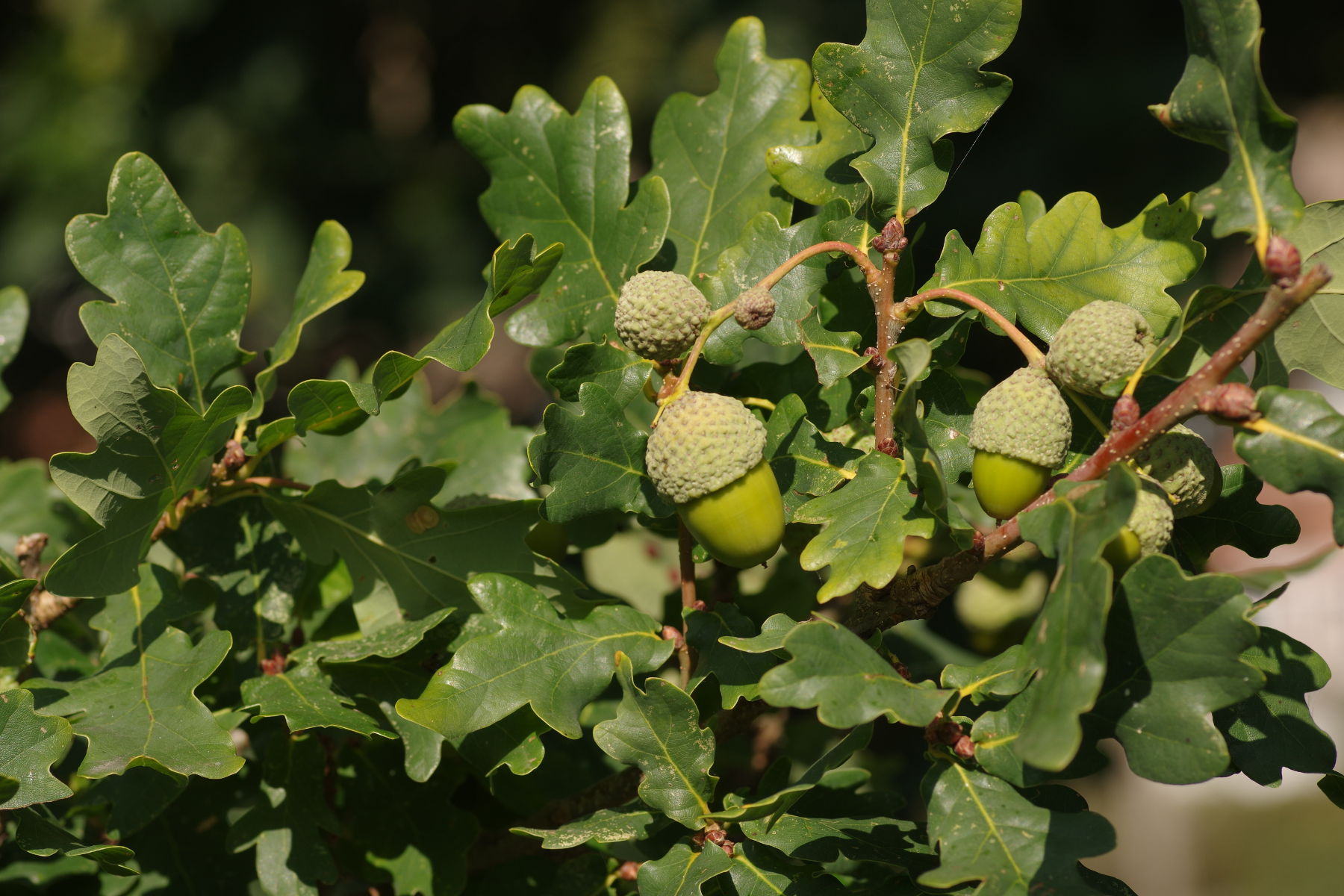
The Acorns (Quercus robur) have reached their full size.


Meanwhile, some summer flowers such as Catsear (Hypochaeris radicata) have kept on flowering for weeks.


There has been some very unseasonable behaviour from some spring flowers. The Marsh Marigold (Caltha Palustris) is having a second flush of flowers.  In the Uckfield area, I have seen both hawthorn and apple in blossom.


For the BSBI Garden Wild Flower Hunt, I have recorded a total of 107 species of wildflowers and plants, of which:

  • 79 probably occurred naturally in our garden
  • 28 were sown or planted.

I was amazed to get so many - especially finding species that I had not noticed before.  The other surveys were:

Monday, 31 December 2018

New Year Plant Hunt 2019 - Uckfield

This is my fifth year of doing the Botanical Society of the British and Ireland's New Year Plant Hunt so I thought I knew what to expect. However, the sheer number of wild or naturalised plants in bloom took me by surprise. We have had a mild run up to the new year and this has enabled more than 40 different species to keep flowering right up until the new year.  The scores for the last few years are:

  • 2015 - 21 species of which 2 were naturalised garden plants that had 'jumped the fence'
  • 2016 - 34 species of which 4 were naturalised
  • 2017 - 23 species of which 2 were naturalised
  • 2018 - 28 species of which 3 were naturalised
  • 2019 - 45 species of which 4 were naturalised

Because odd nooks and crannies near retail outlets generally give good results, I started at the Browns Lane shops.
Shaggy Soldier (Galinsoga quadriradiata) - Browns Lane shops
The first plant that I found was Shaggy Soldier (Galinsoga quadriradiata), which just below the the window of hairdressers near Tesco Express.

Nicotiana garden escapee - Near the bus stop at the top of Browns Lane
I was really surprised to find a big, showy Nicotiana garden escapee thriving near the bus stop at the top of Browns Lane.

Herb Robert (Geranium robertianum), near the petrol station.
A surprisingly good site was the grassy area at the foot of an old mossy wall near the garage at the top of the town. I found Herb Robert (Geranium robertianum), Ragwort (Senecio jacobaea) and others. I took a moment to appreciate the detail of the pretty little Herb Robert flowers.

Common Ramping Fumitory (Fumaria muralis) - scrambling up a hedge at the top of the town
Just before I got into the town itself, I raised a few eyebrows by scrambling up the grassy bank to investigate some pink flowers. I think these were Ramping Fumitory (Fumaria muralis), the mild weather has allowed them to keep growing so that they had reached the top of the hedge. When I got back down, I explained what I was up to and commented on how many flowers were still blooming. A gent walking his dog said that his cherry was blooming for the second time and that the plants are certainly behaving oddly. Several other people that I encountered along the way commented about summer flowers still flowering in their gardens or bulbs making an early start.

Yellow Corydalis (Corydalis lutea) on Holy Cross churchyard walls
By the time I had got as far as the church, I had used up about half of my allotted time but had already beaten last year's score.  My 34th plant this year was a Yellow Corydalis (Corydalis lutea), which was growing out of the churchyard wall.

Hawthorn (Crataegus monogyna) hedge between allotments and bypass
As I was going past the allotments on the by-pass I noticed a few tiny and very early Hawthorn (Crataegus monogyna) blossoms in the hedge.

Oxeye Daisy (Leucanthemum vulgare) at the Fire Station
Even more surprising were the Oxeye Daisies (Leucanthemum vulgare) I found near the fire station.

Taking stock at The Station pub.
I took a break in the Station Pub and spent a little time checking what I had found and what I still needed to look for. I was a little disappointed that I hadn't found Primroses (Primula vulgaris) or Violets but thought that I might find something In Lime Tree Avenue.

Herb Bennet in Lime Tree Avenue
In Lime Tree Avenue, the Violets and Primroses have yet to start blooming - other than the Hawthorn, there are very few spring flowers open - but there was a Herb Bennet (Geum Urbanum) left over from the summer. This seems to be the pattern this year - many summer flowers have been able to keep going due to the long, warm autumn and the mild weather since. The mild weather has also enabled the modest little weeds to prosper. Although my task was to note down species, I did notice that the number of any one species was larger than usual. I am looking forward to seeing the overall results once plant hunters from around the country have managed to upload their lists.

The Science Bit

Location: Uckfield, East Sussex.  Start point: TQ478219

41 Wild Plants Flowering on 30 December 2017

Scientific  name common name
Achillea millefolium Yarrow
Arabidopsis thaliana Thale Cress
Arrhenatherum elatius False Oat Grass
Bellis perennis Daisy
Capsella bursa-pastoris Shepherd's Purse
Cardamine hirsuta Hairy Bittercress
Centranthus ruber  Red Valerian
Cerastium fontanum Common Mouseear
Corylus avellana Hazel
Crataegus monogyna Hawthorn
Crepis capillaris Smooth Hawk's-beard
Erigeron canadensis Canadian Fleabane
Euphorbia peplus Petty Spurge
Fumaria muralis Common Ramping Fumitory
Galinsoga quadriradiata Shaggy Soldier
Geranium robertianum Herb Robert
Geum Urbanium Herb Bennet
Hedera helix  Ivy
Hypochaeris radicata Cat's ear
Lamium album White Dead-nettle
Lamium purpureum Red Dead-nettle
Leucanthemum vulgare Oxeye Daisy
Matricaria discoidea Pineapple Weed
Myosotis arvensis Field Forget me not
Parietaria judaica Pellitory-of-the-wall
Pentaglottis sempervirens Green Alkanet
Picris echioides Bristly Oxtongue
Poa annua  Annual Meadow Grass
Polygonum areanstrum Equal-leaved knotweed
Polypogon viridis Water Bent
Ranunculus acris Meadow buttercup


4 Naturalised Plants flowering on 30 December 2018

Scientific name common name
Bergenia cordifolia  Elephants ears
Campanula poscharskyana Trailing Bellflower
Corydalis lutea Yellow Corydalis
Nicotiana x sanderae


Wednesday, 14 May 2014

How Doctor Who helped me spot a lizard

Yesterday we took a walk through The Woodland Trust's Views (Williams) Wood to Buxted Park and back. We visited earlier in the spring when the spring flowers seemed to be in a frantic race to bloom before the tree canopy closed over them. Now serene greens of fresh leaves are taking over from the fading flowers.

Serene greens and fading blues in Views (Williams) Wood.
The wood is quieter too as the birds that, earlier, were singing to attract mates and protect territories silently hunt food for their young. Fortunately for them the wood is humming with insect life.

Black headed cardinal beetle.
The most colourful insect we saw was a black headed cardinal beetle. It was eye-catching enough when I first saw it resting on an old stump. Long scarlet wing cases contrast with black head, body and legs. When its comb-like antenna detected me creeping up with my camera, out flashed black wings and it flew away in a swirl of red and black. The larvae of this insect live under the bark of freshly dead broad leaved trees. Maybe they benefitted from last year's coppicing.

The woodland rides are still lined with greater stitchwort, which has now been joined by delicate white caraway (I think) flowers. These still appeared here and there as we crossed the river to Buxted Park.  In the more open parkland, hawthorn are blossoming and rabbits lolloping around in the sun.

Bluebells and hawthorn blossom - Buxted Park
Most of the daffodils in the graveyard of St Margaret's Church have faded but a few of the late, pheasant eye, variety are hanging on. The shaggy grass is full of pea-family flowers: red clover, black medic (which is actually yellow), vivid magenta common vetch and the tiny blooms of hairy tare. As bees work systematically through the flowers, a cloud of shiny micro moths dances above.

Lizard draped round the neck of an angel.
As we walked to the gate I spotted an angel headstone, I gestured towards it and was about to make the usual joke about not blinking (this is from an episode of Doctor Who called Blink) when I spotted a lizard draped round the back of the neck of the angel. In a blink it was gone. I hope it had scurried away from the looming human rather than being zapped back into the past. If it hadn't been for me wanting to make a daft joke about a TV show, I never would have seen the lizard.

Buxted Park Hotel

It looks like some trees have been lost in recent storms and, maybe, some of the Limes that fell in the great storm of 1987 have been cleared away. Parts of the park feel a little more open now and there are some fine views of the Buxted Park Hotel.

Geese and goslings.

Passing between the lakes there are a variety of geese with fluffy goslings. Like us, they fled to the shelter of the trees when a hail storm interrupted the sunshine. We went home to our warm, dry house, leaving the creatures of the park and the wood to fend for themselves.

Sunday, 9 June 2013

Hempstead Meadow in June

I felt rather guilty about marching through Hempstead Meadow Nature Reserve on Saturday.  I had my hair trimmed and the grey touched out, which took most of the morning. Obviously it is the trim that takes most of the time! Unfortunately this meant that I couldn't join the working party who were removing the Himalayan Balsam as described in last week's post.

I did get a chance to look at the trees and June's selection of wild flowers.  Most of the blossom and the delicate spring flowers have gone but others have taken their place.


Hawthorn blossom and black poplar tree (just right of centre).
The first treat was the Hawthorn blossom. This is really thick on the bushes this year. The 5 black poplars that were planted about 15 years again are fine looking trees with shimmering shiny leaves.


Meadow Cranesbill
In the dryer meadow area, I found blue meadow cranesbills. This is a real treat, I have never seen one growing wild before. Once I get closer to the wet areas there is loads of treacherous white and frothy hemlock water dropwort.


Pulled up balsam
I have a quick chat with the working party and then move on. The pulled up balsam on the side of the boardwalk is clear evidence of their efforts.

It was a very short visit as I dashed back from the town to home, but that is the beauty of this local reserve. I can take in its beauty and tranquility without making a special journey.